


Table of contents6 sections · tap to expandShowHide
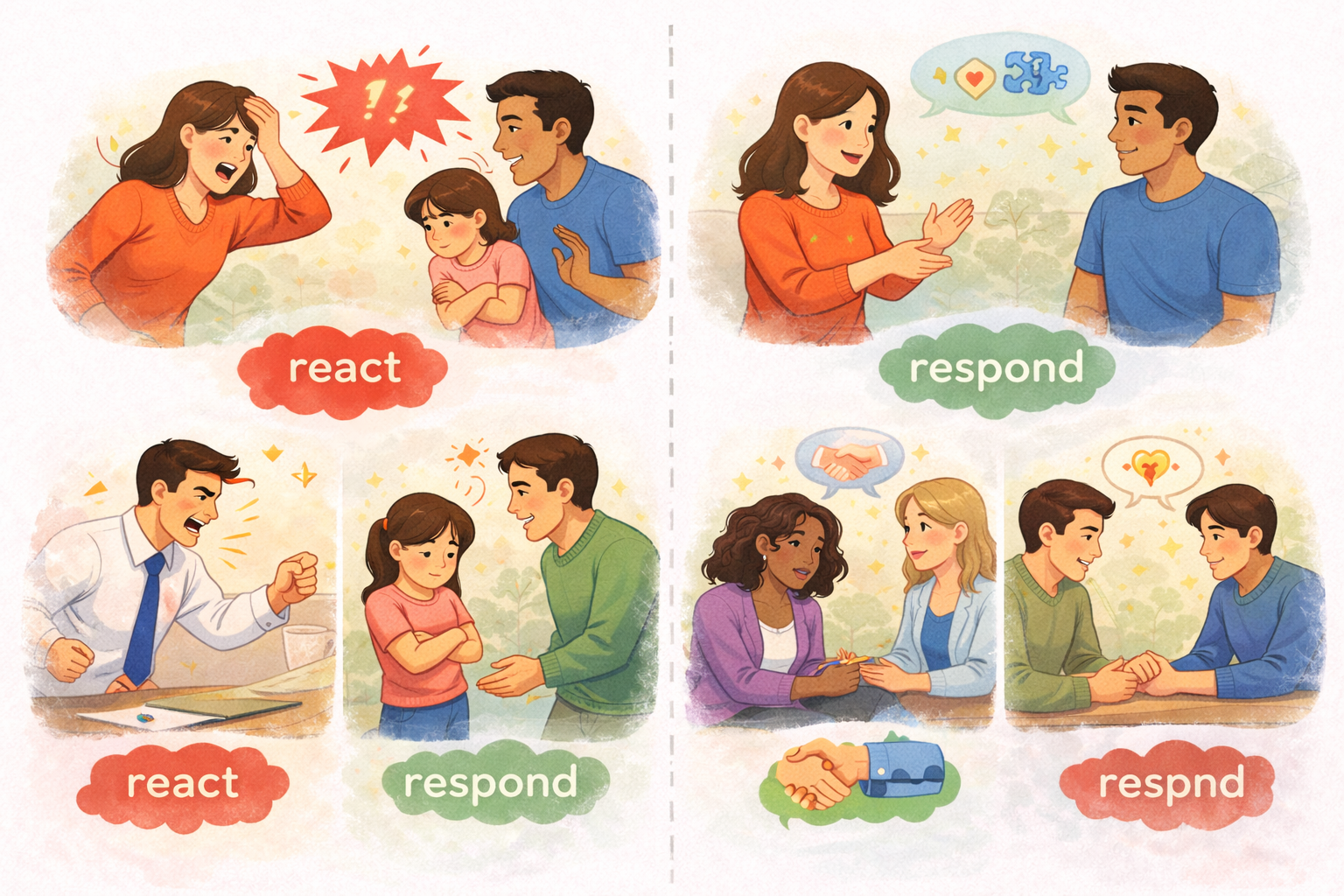
It is 5:30 PM, the kitchen floor is covered in spilled juice, and the toddler is shouting because the red cup is in the dishwasher. In this moment of sensory overload and exhaustion, your heart races and a sharp, frustrated retort sits right at the edge of your teeth. This is the crossroads where we either react from a place of stress or respond from a place of intentionality.
What This Looks Like in Real Life
For most parents and caregivers, reactivity isn't a lack of love; it is a symptom of a nervous system that has been pushed to its limit. Reacting is the "autopilot" mode of the human experience. When we react, we are moved by impulse, often driven by the amygdala—the part of the brain responsible for the fight-or-flight response. This can manifest as snapping at a partner for a small oversight, sending an irritable email to a colleague, or over-correcting a child for a minor mistake.
Conversely, responding is an active choice. It is the ability to acknowledge the spill, the noise, or the criticism while staying tethered to your values. Responding doesn't mean you don't feel angry; it means you are the one steering the ship despite the storm. If you are currently navigating high-stress interactions, you may also find Handling Conflict Mindfully helpful for de-escalating these moments.
The key differences involve:
- The Timeline: Reactions are instantaneous and reflexive; responses involve a deliberate pause.
- The Driver: Reactions are driven by fear or defense; responses are driven by logic and empathy.
- The Outcome: Reactions often leave us feeling guilty or drained; responses lead to resolution and clarity.
- The Physicality: Reactions feel tight and urgent in the body; responses feel grounded and steady.
Why It Matters for Parents and Caregivers
As a caregiver, your emotional state often sets the thermostat for the entire household. Research from the American Psychological Association (APA) suggests that when parents model emotional regulation, children are more likely to develop those same skills. However, when we live in a state of constant reactivity, we unintentionally create a high-cortisol environment that can lead to burnout for us and anxiety for those we care for.
Chronic stress, common in caregiving, according to the National Institutes of Health (NIH), can actually lower our threshold for emotional regulation. This means the "fuse" gets shorter the longer we go without rest. Understanding that reactivity is a biological signal of stress—rather than a character flaw—is the first step toward change. It allows us to move from a place of self-judgment to a place of self-stewardship. By learning to Set Boundaries Without Guilt, we protect the emotional reserves needed to choose response over reaction.
"Between stimulus and response there is a space. In that space is our power to choose our response. In our response lies our growth and our freedom."
The Science of the "Parental Pause"
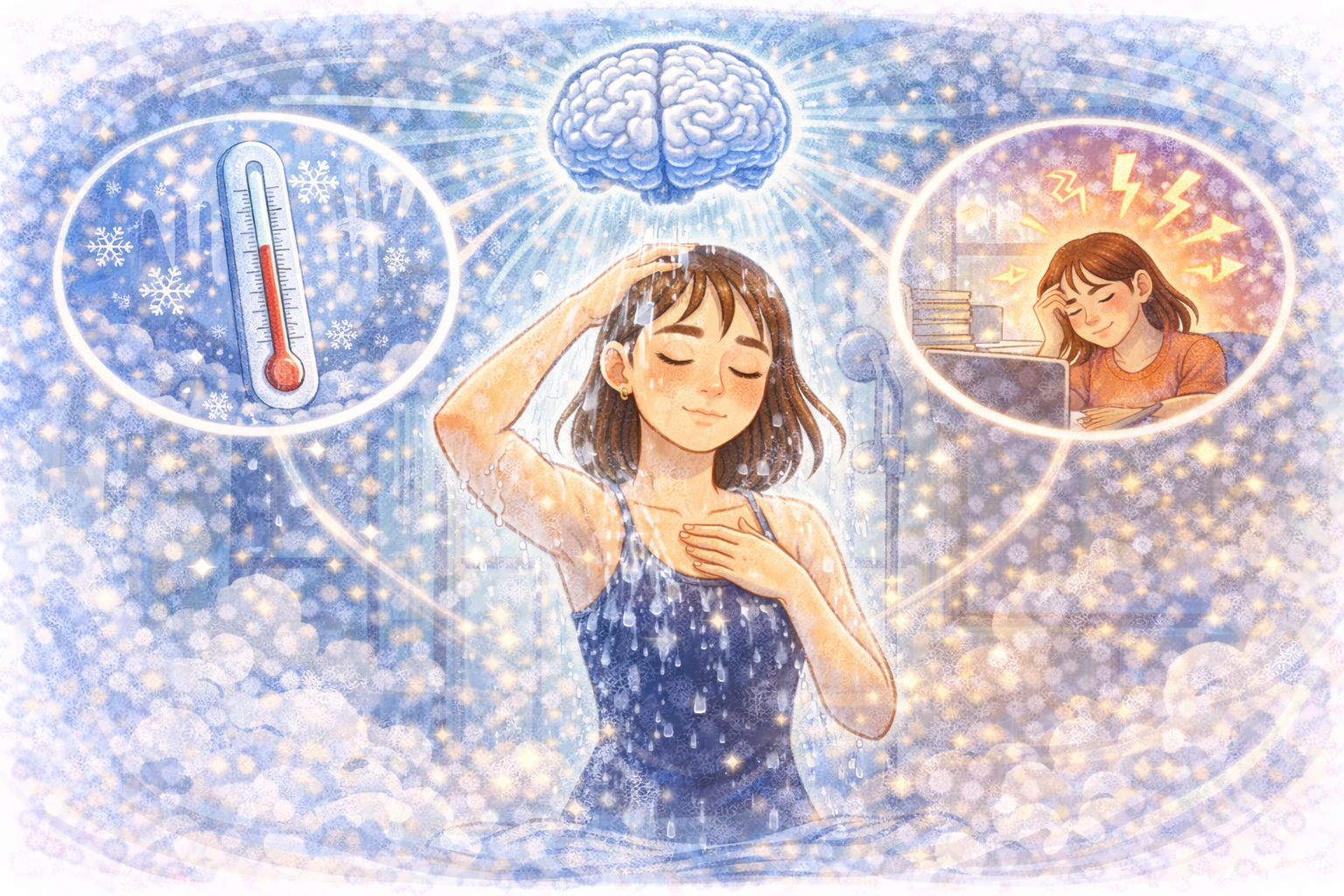
When you feel triggered, your brain undergoes a "neural hijack." Studies from Harvard Medical School show that during high-stress moments, the prefrontal cortex—the area of the brain responsible for executive function, empathy, and impulse control—essentially goes "offline." Meanwhile, the amygdala takes over, prioritizing survival over logic.
This biological reality explains why it is so difficult to "just be calm" when you’re in the heat of a moment. To regain control, you must physically signal to your nervous system that you are safe. This is why the "Power of the Pause" is so effective. Even a three-second gap allows the thinking brain to re-engage, moving the energy away from the primal threat centers and back to the centers of reason.
To deepen this practice, it helps to understand what specifically sets you off. Identifying your personal Emotional Triggers and Self-Awareness can help you anticipate when a "hijack" is likely to happen, allowing you to prepare your pause before the pressure builds.
A 5-Minute Version You Can Try Today
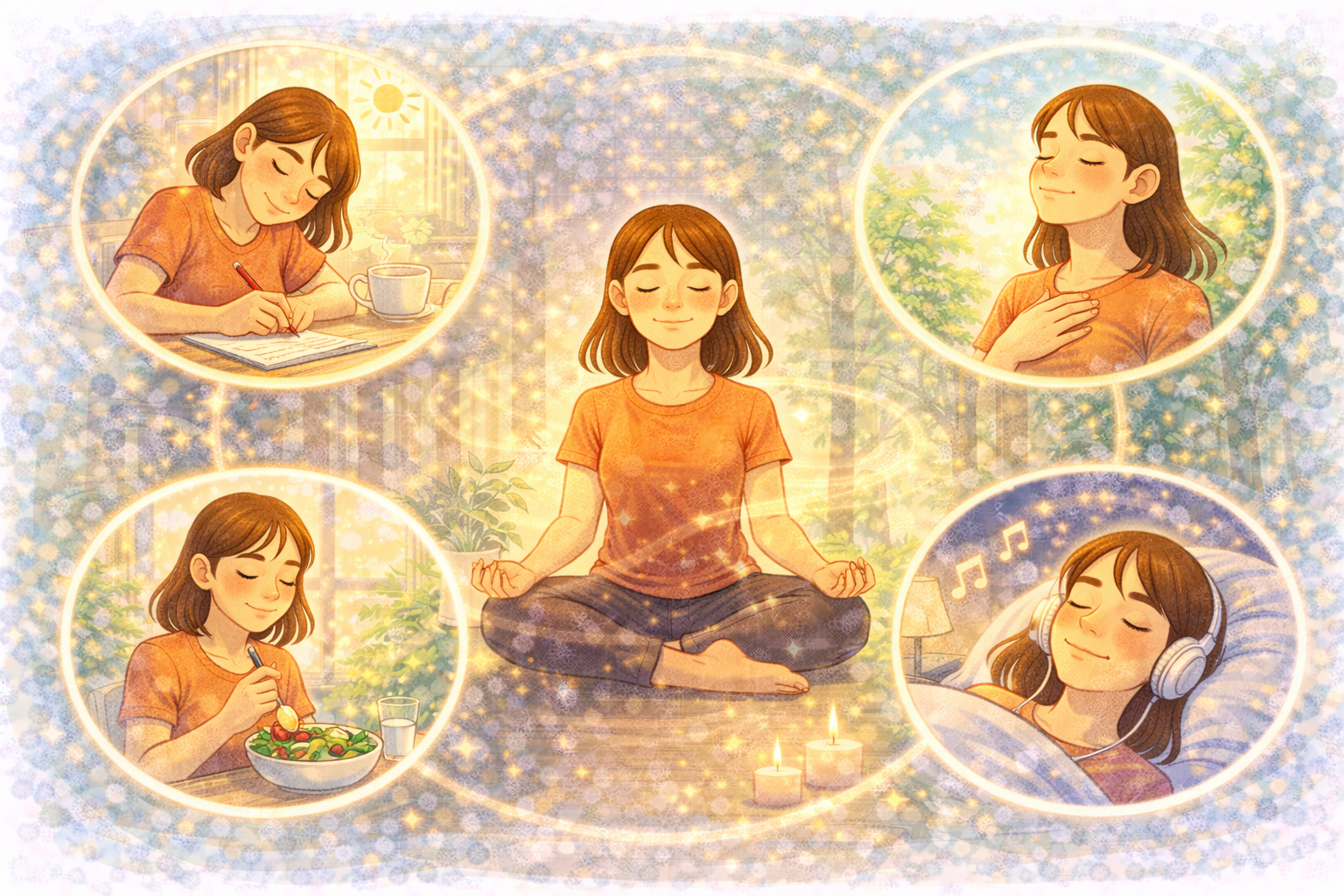
You don’t need an hour of meditation to shift your brain from reaction to response. You can implement these five micro-steps in the time it takes for the kettle to boil or during a brief bathroom break.
- The Physical Check-In (1 minute): Scan your body. Are your shoulders at your ears? Is your jaw clenched? Simply noticing these signs of reactivity helps "name it to tame it."
- The "2-4-6" Breath (1 minute): Inhale for 2 counts, hold for 4, and exhale for 6. The NIH notes that extended exhales activate the parasympathetic nervous system, which acts as a natural brake on stress. For more on this, see Using Breath to Anchor the Mind.
- The Distanced Observation (1 minute): View the situation as if you were a fly on the wall. Ask: "What is actually happening right now, stripped of my interpretation?"
- The Values Alignment (1 minute): Ask yourself: "How would the person I want to be handle this right now?" This aligns your next action with your long-term goals rather than your short-term frustration.
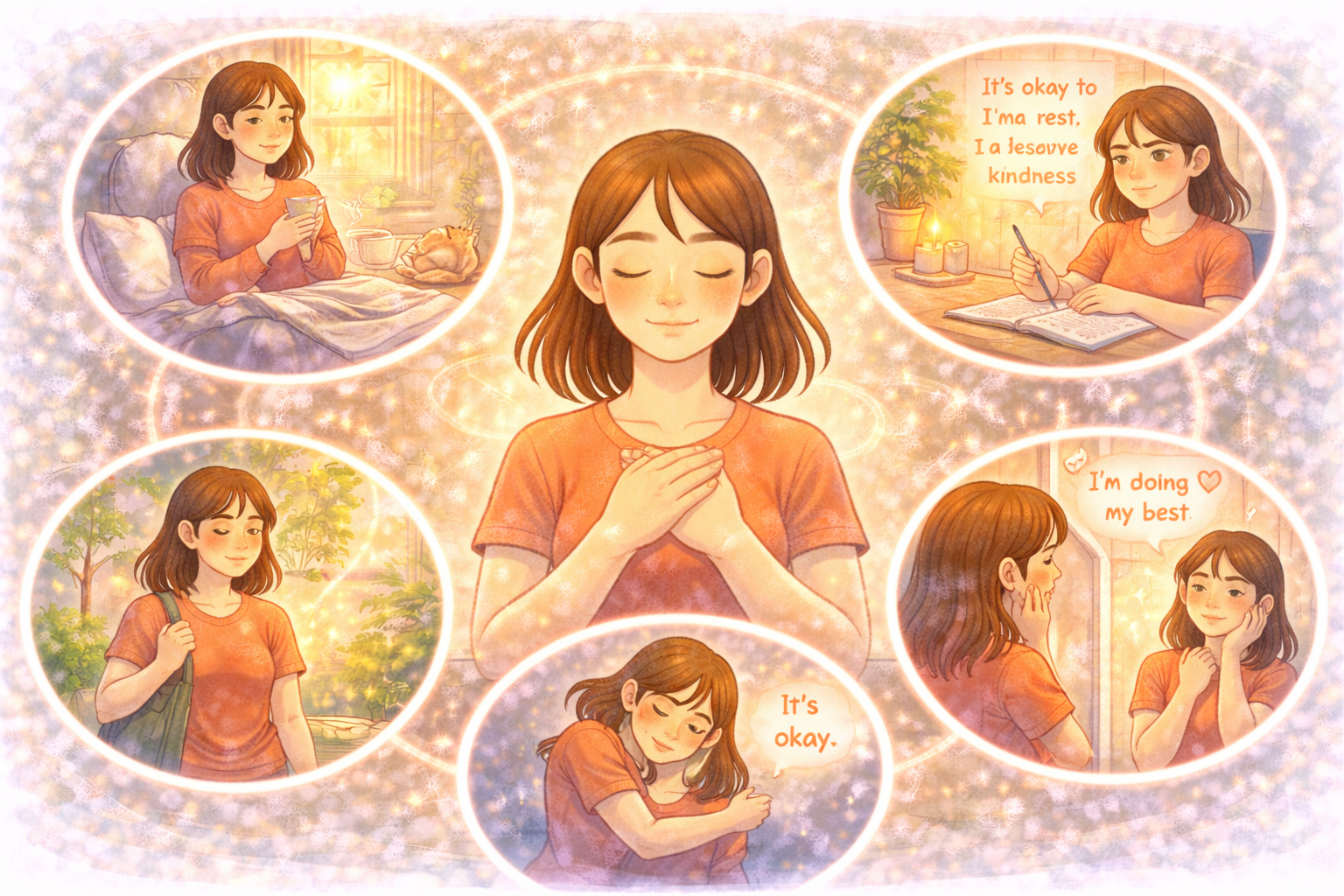
- The Internal Reassurance (1 minute): Silently say to yourself, "I am overwhelmed, but I am safe," or "This is a moment of struggle, not a lifetime of failure."
The Role of Mindfulness in Communication
Mindfulness isn't just about sitting still; it is an active tool for communication. Research from Stanford University indicates that mindfulness practices increase our capacity to hold "cognitive flexibility." In a conversation with a partner or an aging parent, this means you can hear their frustration without immediately becoming defensive. You can see their words as a reflection of their internal state rather than a direct attack on yours.
When we apply mindfulness to our dialogue, we move toward Assertive vs. Aggressive Communication. This allows us to express our needs clearly and firmly without the emotional "sting" that often accompanies a reactive outburst. If you’re unsure where to begin with these concepts, start with What Is Mindfulness and How to Start?
When to Seek Extra Support
There are times when the "pause" feels impossible to find. If you find yourself in a state of constant irritability, or if your reactions are impacting your safety or the safety of your family, it may be a sign of deeper burnout, trauma, or a mood disorder. Chronic reactivity is often a cry for help from a nervous system that can no longer regulate itself on its own.
Seeking professional help from a therapist or counselor is not a sign of failure; it is a vital step in rebuilding your emotional resilience. When we address the root causes of our stress—such as lack of sleep, grief, or isolation—we naturally increase our capacity to respond. Protecting your peace also involves practicing Trust Building Habits within your support network so you aren't carrying the load alone.
Bottom Line: Moving from reaction to response is a muscle that strengthens with repetition. It’s not about being perfect; it’s about noticing when you’ve lost your balance and having the tools to find your center again. By taking small, intentional steps—like those found in Daily Micro-Actions That Build Closeness—you can transform your daily environment into one of calm, even in the midst of chaos.
This article is for general wellbeing information and is not medical advice. If you are in crisis in the US, call or text 988.
For people who care too much
A five-minute refresh, every day.
If this gave you a moment of calm, MindBloom Pro sends ten small positive things to your dashboard each morning — chosen for the family life you're actually living.
Discussion
Comments
Sign in to join the conversation.
Sign inLoading comments…