


Table of contents26 sections · tap to expandShowHide
Cold showers have long been associated with toughness, discipline, and physical endurance. In recent years, they have also gained attention for their potential psychological benefits—particularly their role in building mental resilience. Mental resilience refers to the ability to adapt to stress, regulate emotional responses, and recover from discomfort or challenge. Research from Harvard Health, the National Institutes of Health, the American Psychological Association, and peer-reviewed physiology studies suggests that controlled exposure to cold may strengthen stress adaptation and emotional regulation when practiced safely and intentionally.
Cold showers are not a cure-all, nor are they suitable for everyone. However, when approached mindfully, they may serve as a simple training ground for resilience—teaching the nervous system how to remain calm under pressure.
If you are exploring resilience-building practices, you may also find this helpful:
Building Emotional Resilience
What Is Mental Resilience?
Mental resilience is the capacity to respond to stress without becoming overwhelmed.
It does not eliminate discomfort.
Instead, it improves recovery, adaptability, and emotional stability.
APA research shows that resilience is a skill that can be developed through repeated exposure to manageable stress followed by recovery.
Why Discomfort Plays a Role in Resilience
Resilience grows through challenge.
When the body experiences mild, controlled stress, it learns adaptation.
This process is known as hormesis.
Cold exposure is one form of hormetic stress.
How the Body Responds to Cold Exposure
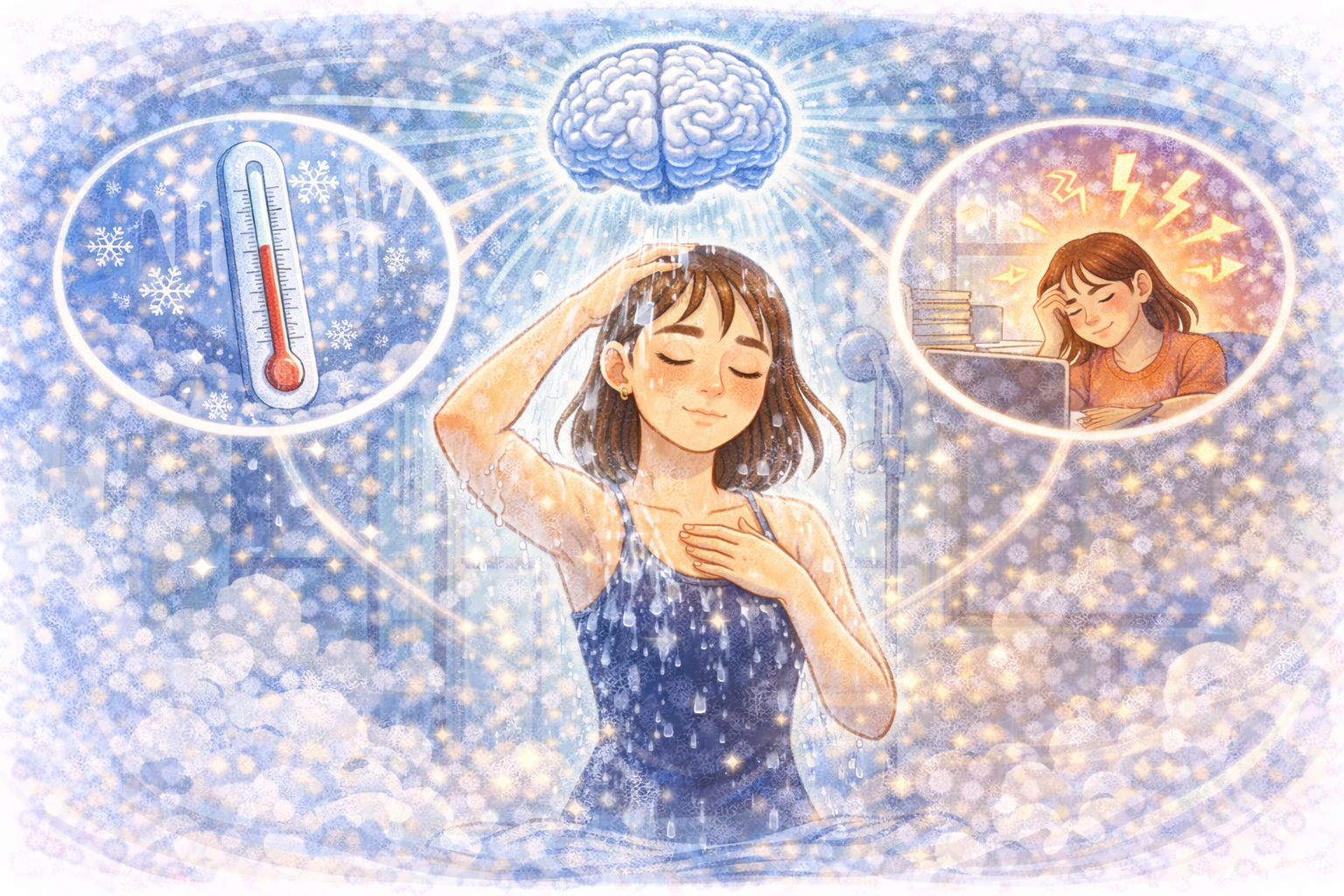
Cold water activates the sympathetic nervous system.
Heart rate increases.
Breathing becomes faster.
This mirrors the body’s natural stress response.
Learning to stay calm during this response trains emotional regulation.
The Nervous System and Cold Showers
The nervous system has two main branches:
- the sympathetic (activation) system
- the parasympathetic (calming) system
Cold exposure briefly activates the sympathetic system.
Intentional breathing helps shift back into parasympathetic calm.
This transition strengthens nervous system flexibility.
Cold Showers as Stress Training
Cold showers provide a predictable stressor.
You choose when to enter discomfort.
This sense of control changes how the brain interprets stress.
NIH-supported studies show that perceived control reduces stress impact.
Breath Control and Emotional Regulation
Breathing is central to cold exposure.
Slow, steady breathing prevents panic.
This reinforces self-regulation skills.
Related reading:
Breathing Patterns to Calm an Anxious Mind
Cold Exposure and Mood
Some studies suggest cold exposure may influence neurotransmitters.
Increases in norepinephrine and endorphins have been observed.
These chemicals support alertness and mood stability.
Harvard Health notes that cold exposure may temporarily elevate mood.
Cold Showers and Mental Clarity
Cold water increases alertness.
Blood flow shifts.
This can produce a feeling of mental sharpness.
However, clarity depends on moderation.
Excessive exposure may increase stress rather than reduce it.
Resilience Through Voluntary Discomfort
Choosing discomfort builds confidence.
The brain learns that discomfort is survivable.
This lesson carries into daily stressors.
Small challenges reduce fear responses.
Cold Showers vs Chronic Stress
Cold showers are brief and intentional.
Chronic stress is prolonged and uncontrollable.
This distinction matters.
Resilience grows from controlled stress with recovery.
Emotional Regulation Under Pressure
Cold exposure challenges emotional reactivity.
Initial shock triggers impulse.
Remaining present strengthens emotional control.
This improves responses to non-physical stress.
Cold Showers and Self-Discipline
Consistency builds discipline.
Showing up despite discomfort reinforces self-trust.
This confidence transfers into other habits.
Related reading:
Motivation vs. Discipline
Cold Exposure and Anxiety Sensitivity
Anxiety often involves fear of bodily sensations.
Cold exposure creates strong physical sensations.
Repeated exposure reduces fear response.
This process is similar to exposure therapy.
Cold Showers and Emotional Resilience
Emotional resilience improves when the body learns safety during stress.
Cold showers teach that discomfort does not equal danger.
This reframing reduces emotional reactivity.
How Long Should a Cold Shower Be?
Short exposure is sufficient.
30 seconds to 2 minutes is often enough.
Longer is not better.
Gradual exposure is safer.
Cold Showers vs Ice Baths
Cold showers are more accessible.
Ice baths are more intense.
For mental resilience, showers are usually sufficient.
Intensity should match individual tolerance.
Who Should Be Cautious With Cold Exposure
Cold exposure is not appropriate for everyone.
People with cardiovascular conditions should consult professionals.
Safety matters more than toughness.
Integrating Cold Showers Mindfully
Cold showers should be intentional.
Mindfulness prevents forcing.
Stopping early is not failure.
Awareness builds resilience more than endurance.
Related reading:
Using Breath to Anchor the Mind
Common Myths About Cold Showers
- Myth: Longer is better
Reality: Short exposure works - Myth: Pain equals progress
Reality: Regulation matters - Myth: Cold showers cure anxiety
Reality: They support resilience, not replace care
Cold Showers as a Mental Reset
Cold exposure interrupts rumination.
Attention shifts to the present moment.
This can reset mental loops.
Presence strengthens psychological flexibility.
Cold Exposure and Habit Formation
Cold showers often become a keystone habit.
They influence other healthy behaviors.
Confidence grows from consistency.
When Cold Showers Are Not Helpful
Forcing exposure can increase stress.
Resilience requires safety.
Listening to the body is essential.
Cold Showers and Long-Term Resilience
Over time, the nervous system adapts.
Stress responses become less reactive.
This improves emotional stability.
Cold Showers vs Other Resilience Tools
Cold exposure is one tool.
It works best alongside rest, connection, and boundaries.
Related reading:
When to Say “No” to Protect Your Peace
Building Resilience Through Choice
Choosing discomfort builds agency.
Agency strengthens resilience.
Cold showers reinforce this skill.
Final Thoughts
Cold showers may support mental resilience by training the nervous system to remain regulated during stress.
They are not about endurance or punishment.
They are about awareness, breath, and choice.
When practiced gently, cold exposure becomes a teacher.
Resilience is not built by avoiding discomfort—but by learning how to move through it with calm and control.
More resilience-focused resources from MindBloomDaily:
Building Emotional Resilience
The Science of Willpower
For people who care too much
A five-minute refresh, every day.
If this gave you a moment of calm, MindBloom Pro sends ten small positive things to your dashboard each morning — chosen for the family life you're actually living.

Discussion
Comments
Sign in to join the conversation.
Sign inLoading comments…