


Table of contents17 sections · tap to expandShowHide
Herbal teas have been used for centuries to calm the mind, soothe the body, and support mental clarity. Long before modern neuroscience, cultures around the world relied on plant-based infusions to manage stress, improve focus, and encourage relaxation. Today, research from Harvard Medical School, the National Institutes of Health, the American Psychological Association, and Stanford University supports what tradition long suggested: certain herbs influence the nervous system in gentle, meaningful ways.
Herbal teas work not by forcing relaxation, but by supporting the body’s natural balance. When used consistently, they can become a simple, grounding ritual that promotes calm alertness rather than sedation.
If you’re exploring natural approaches to mental wellness, you may also find this helpful:
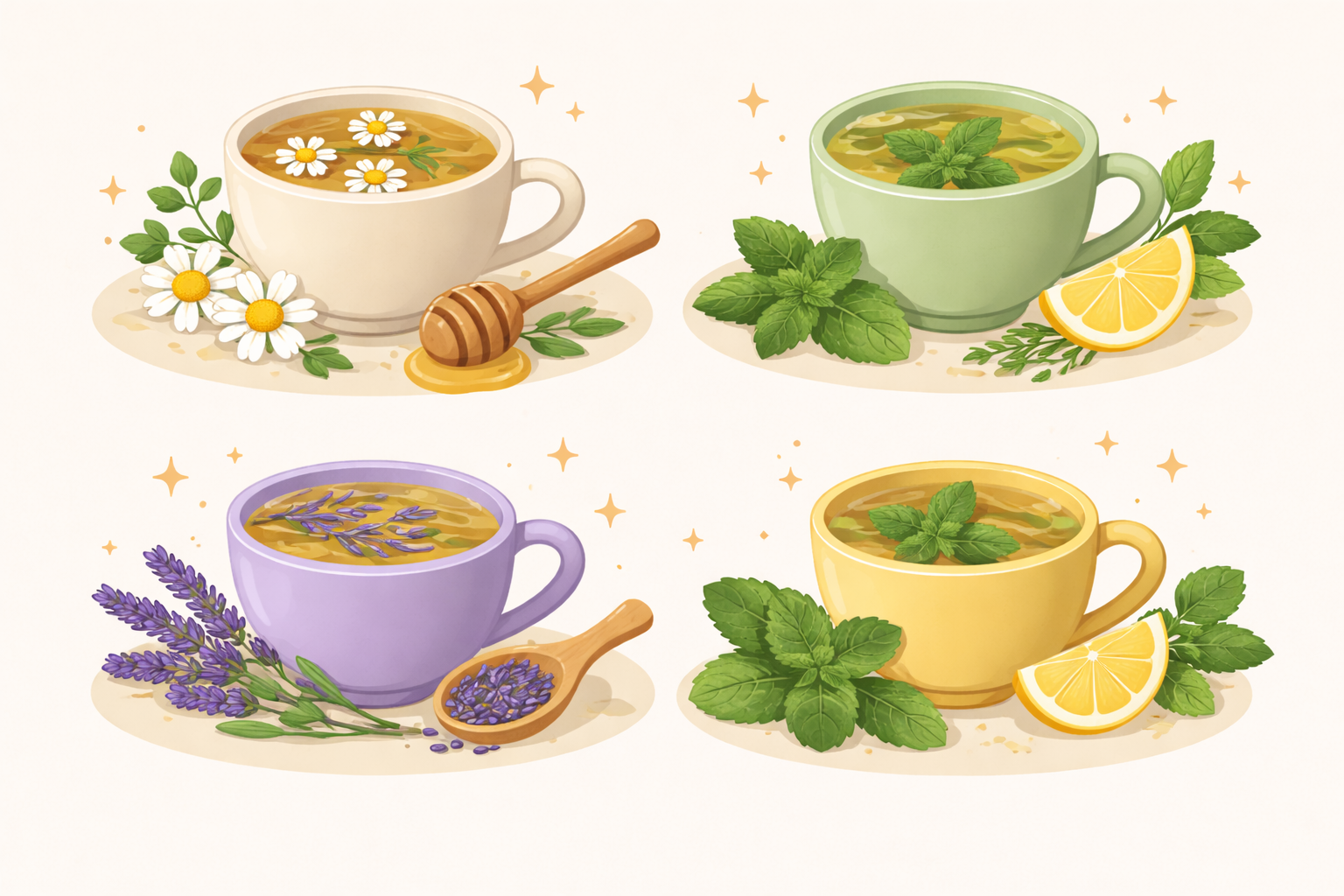
Common Herbs People Use for Calm and Focus
Why Herbal Teas Support Calm and Mental Clarity
Many herbs contain bioactive compounds that interact with neurotransmitters, stress hormones, and inflammatory pathways. When steeped in hot water, these compounds are released gently, making tea one of the mildest and most accessible ways to experience herbal benefits.
NIH-supported research shows that herbal teas can support:
- nervous system regulation
- stress reduction
- emotional balance
- gentle cognitive support
Unlike stimulants, most calming herbal teas promote clarity without jitteriness or crashes.
Chamomile Tea: Gentle Calm for the Nervous System
Chamomile is one of the most widely studied calming herbs. It contains apigenin, a compound that binds to receptors in the brain associated with relaxation.
Harvard research links chamomile use to reduced anxiety symptoms and improved sleep quality.
Chamomile tea is especially helpful for:
- evening relaxation
- stress-related tension
- overactive thoughts
Its effects are mild and non-sedating, making it suitable for daily use.
Lemon Balm Tea: Calm Focus and Emotional Balance
Lemon balm is known for promoting calm without mental dullness. NIH research shows that lemon balm influences GABA activity, helping reduce nervous system overactivity.
Lemon balm tea supports:
- stress relief
- mood stability
- gentle mental clarity
It is often used during the day when relaxation and alertness are both desired.
For non-caffeinated focus strategies, explore:
Simple Ways to Improve Focus Without Caffeine
Peppermint Tea: Mental Refreshment and Alertness
Peppermint is commonly associated with digestion, but its effects extend to cognitive function. Stanford research suggests that peppermint aroma and ingestion may enhance alertness and memory.
Peppermint tea is useful for:
- mental fatigue
- midday sluggishness
- digestive discomfort that affects focus
Unlike caffeine, peppermint provides a refreshing lift without overstimulation.
Lavender Tea: Reducing Stress and Emotional Tension
Lavender is best known for its calming aroma, but lavender tea also supports relaxation. APA-reviewed studies show lavender’s influence on serotonin and stress regulation.
Lavender tea may help with:
- emotional tension
- restlessness
- difficulty winding down
Lavender tea is often used in evening routines.
Related reading:
Evening Routines That Promote a Calm Mind
Green Tea (L-Theanine): Calm Alertness
Green tea contains L-theanine, an amino acid that promotes relaxed focus. NIH research shows L-theanine increases alpha brain waves associated with calm awareness.
When paired with small amounts of caffeine, green tea produces steady energy without jitteriness.
Green tea supports:
- focused attention
- stress reduction
- mental clarity
Rooibos Tea: Caffeine-Free Relaxation
Rooibos is naturally caffeine-free and rich in antioxidants. Harvard research links antioxidants to reduced inflammation and improved brain health.
Rooibos tea is helpful for people sensitive to stimulants.
Tulsi (Holy Basil) Tea: Stress Adaptation
Tulsi is considered an adaptogen—an herb that helps the body adapt to stress. NIH-supported studies suggest tulsi supports cortisol regulation.
Tulsi tea may support:
- stress resilience
- emotional balance
- mental clarity under pressure
Passionflower Tea: Quieting a Busy Mind
Passionflower has traditionally been used to calm nervous system hyperactivity. Research indicates it may increase GABA activity.
Passionflower tea is often used for:
- racing thoughts
- restlessness
- difficulty relaxing
How Herbal Teas Affect the Gut-Brain Connection
Many herbal teas also support digestion, which plays a role in mental wellbeing. A healthy gut-brain connection supports stable mood and clearer thinking.
Learn more here:
Gut-Brain Connection Explained
When to Drink Herbal Teas for Best Effect
Timing influences how herbal teas support calm and clarity.
- Morning: peppermint, green tea
- Midday: lemon balm, tulsi
- Evening: chamomile, lavender, rooibos
Creating a Tea Ritual for Mindfulness
The act of preparing and drinking tea can itself be grounding. Mindfulness research shows that ritualized pauses reduce stress.
For mindful awareness, explore:
Daily Mindfulness Prompts
Herbal Tea vs Supplements
Tea offers lower, gentler doses than capsules or extracts. This makes it suitable for daily use and reduces risk of overstimulation.
For many people, tea is the safest entry point into herbal support.
Safety and Considerations
While herbal teas are generally safe, certain herbs may interact with medications or medical conditions.
NIH recommends consulting a healthcare professional if you are pregnant, nursing, or taking medications.
Common Myths About Herbal Teas
- Myth: Herbal teas work instantly
Reality: Benefits build with consistency - Myth: Stronger is better
Reality: Gentle support is often more effective - Myth: Tea replaces sleep or nutrition
Reality: It complements healthy habits
Supporting Calm and Clarity Beyond Tea
Herbal teas work best alongside lifestyle habits such as adequate sleep, movement, and stress management.
For additional calm-supporting practices, explore:
Using Breath to Anchor the Mind
Final Thoughts
Herbal teas offer a gentle, accessible way to support calm and mental clarity. Rather than forcing the mind into relaxation, they work with the body’s natural systems.
When used consistently and mindfully, herbal teas become more than a beverage—they become a daily anchor for balance and awareness.
More natural wellness guides from MindBloomDaily:
Common Herbs People Use for Calm and Focus
Balanced Breakfast Ideas for Mental Clarity
For people who care too much
A five-minute refresh, every day.
If this gave you a moment of calm, MindBloom Pro sends ten small positive things to your dashboard each morning — chosen for the family life you're actually living.

Discussion
Comments
Sign in to join the conversation.
Sign inLoading comments…