


Table of contents17 sections · tap to expandShowHide
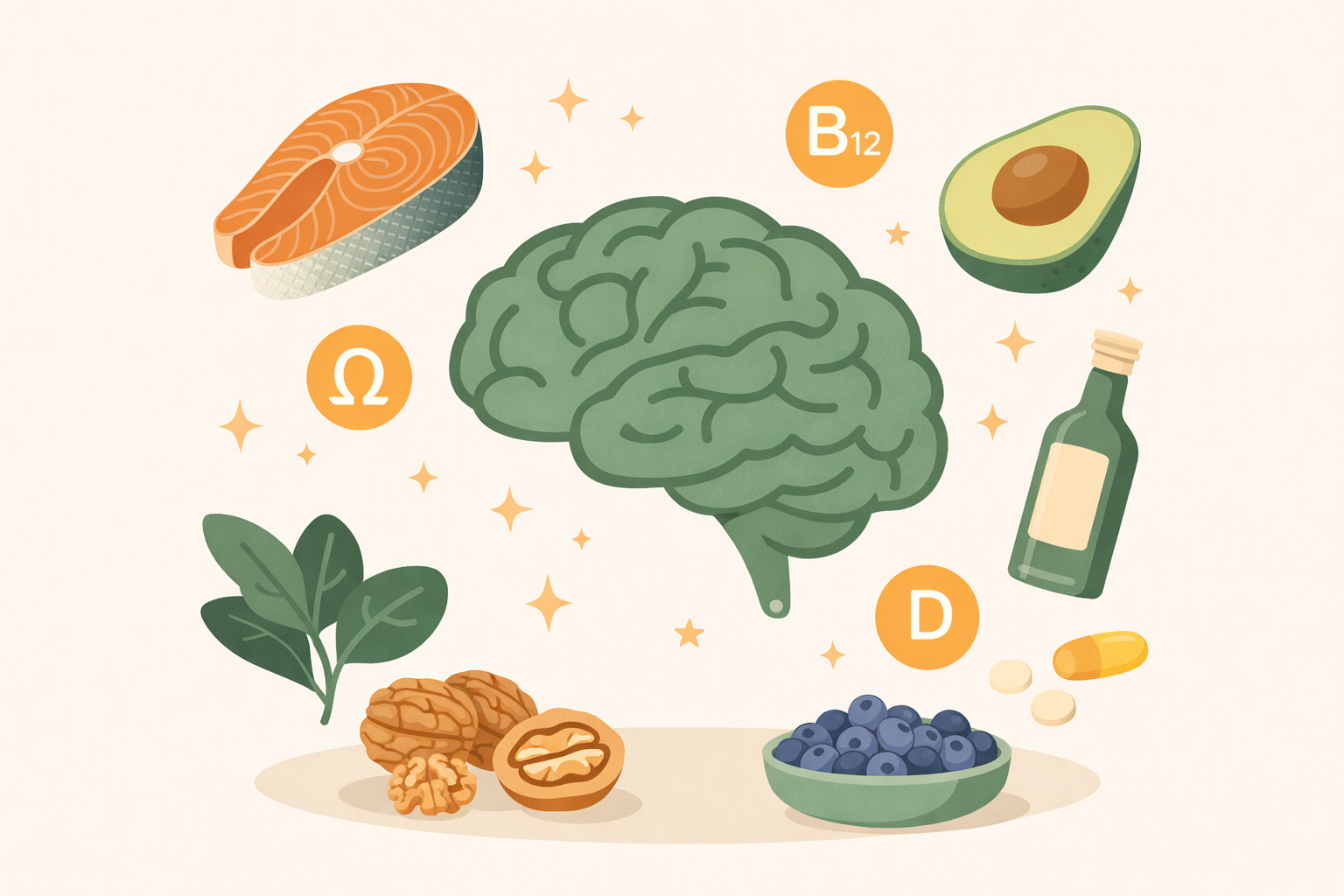
The brain is one of the most energy-demanding organs in the human body. Although it represents only about 2% of body weight, it consumes roughly 20% of daily energy. Because of this, the nutrients you consume play a direct role in how clearly you think, how stable your mood feels, and how resilient your mind is under stress. Research from Harvard Medical School, the National Institutes of Health, the American Psychological Association, and Stanford University shows that specific nutrients support brain structure, neurotransmitter function, and cognitive performance.
Brain health is not determined by a single “superfood.” Instead, it is shaped by consistent intake of nutrients that support neural communication, reduce inflammation, and protect brain cells from damage.
If you’re exploring nutrition from a mental wellness perspective, you may also find this helpful:
Foods That Are Linked to Better Mood and Energy
Why Nutrition Matters for Brain Health
The brain relies on a steady supply of nutrients to create neurotransmitters, maintain cell membranes, and regulate inflammation. When nutrient intake is poor or imbalanced, mental clarity, focus, and emotional regulation can suffer.
NIH-supported research shows that nutrient deficiencies are associated with symptoms such as brain fog, irritability, low mood, and reduced concentration.
Brain-friendly nutrients support:
- memory and learning
- focus and attention
- mood stability
- stress resilience
Omega-3 Fatty Acids
Omega-3 fatty acids are among the most studied nutrients for brain health. They are essential components of neuronal cell membranes and support communication between brain cells.
Harvard research links omega-3 intake to improved cognitive performance and emotional balance.
Omega-3s support the brain by:
- enhancing synaptic plasticity
- reducing neuroinflammation
- supporting neurotransmitter signaling
They are especially important for mood regulation and long-term cognitive health.
B Vitamins and Brain Function
B vitamins play a crucial role in energy production and neurotransmitter synthesis. Deficiencies in B vitamins are commonly associated with fatigue, low mood, and cognitive difficulties.
Key B vitamins for the brain include:
- B6: supports serotonin and dopamine production
- B9 (folate): supports neural development and cognition
- B12: protects nerve cells and supports memory
NIH research shows that adequate B vitamin intake supports mental clarity and reduces cognitive decline risk.
Magnesium
Magnesium is involved in over 300 biochemical reactions in the body, many of which affect brain function. It plays a key role in regulating neurotransmitters and calming the nervous system.
Low magnesium levels are associated with increased stress sensitivity and sleep disruption.
Magnesium supports:
- relaxation of the nervous system
- healthy sleep cycles
- emotional regulation
For stress-related mental clarity, explore:
Science-Backed Ways People Reduce Everyday Stress
Iron and Cognitive Performance
Iron is essential for oxygen transport to the brain. Without adequate oxygen, cognitive performance declines.
NIH studies show that iron deficiency can impair attention, memory, and mental energy—even before anemia develops.
Iron supports:
- focus and alertness
- mental stamina
- cognitive speed
Zinc and Neurotransmitter Balance
Zinc plays a role in synaptic communication and brain plasticity. It also supports immune function, which indirectly affects brain health.
Stanford research links zinc balance to learning and memory processes.
Low zinc levels have been associated with mood disturbances and reduced cognitive flexibility.
Vitamin D and Brain Health
Vitamin D receptors are widely distributed throughout the brain. This vitamin plays a role in neuroprotection and inflammation control.
Harvard studies show that low vitamin D levels are associated with mood changes and cognitive decline.
Vitamin D supports:
- neurotransmitter synthesis
- immune-brain signaling
- emotional balance
For more on light and mental health, see:
Natural Light and Your Mental Health
Amino Acids and Neurotransmitters
Amino acids are the building blocks of neurotransmitters.
Key amino acids include:
- tryptophan: precursor to serotonin
- tyrosine: precursor to dopamine and norepinephrine
- glutamine: supports cognitive processing
NIH research shows that balanced protein intake supports neurotransmitter balance and mental performance.
Antioxidants and Brain Protection
The brain is particularly vulnerable to oxidative stress due to its high oxygen use.
Antioxidants help protect brain cells from damage.
Harvard research highlights antioxidants such as:
- vitamin C
- vitamin E
- polyphenols
These compounds support long-term cognitive health and reduce inflammation.
Choline and Memory
Choline is essential for the production of acetylcholine, a neurotransmitter involved in memory and learning.
NIH research links choline intake to improved cognitive performance.
Choline supports:
- memory formation
- attention
- brain cell integrity
The Gut-Brain Connection and Nutrients
Nutrients affect the brain both directly and through the gut microbiome.
Dietary fiber, polyphenols, and healthy fats support beneficial gut bacteria that produce neuroactive compounds.
Learn more here:
Gut-Brain Connection Explained
Hydration and Cognitive Function
Even mild dehydration can impair attention and memory.
NIH research confirms that adequate hydration supports cognitive performance and mood stability.
Nutrients That Support Focus
Focus depends on balanced neurotransmitter activity and stable energy supply.
Brain-friendly nutrients for focus include:
- omega-3 fatty acids
- B vitamins
- iron
- magnesium
For focus strategies beyond nutrition, see:
Simple Ways to Improve Focus Without Caffeine
Common Nutrient Myths About Brain Health
- Myth: One supplement can fix brain health
Reality: Consistency and balance matter most - Myth: Brain health declines suddenly
Reality: It reflects long-term habits - Myth: More is always better
Reality: Excess intake can be harmful
Supporting Brain Health Through Diet
Brain-friendly nutrition works best when paired with:
- regular meals
- adequate sleep
- stress management
- physical activity
Nutrition is one part of a larger mental wellness system.
When to Consider Professional Advice
If you experience persistent cognitive symptoms, fatigue, or mood changes, consult a healthcare professional before making major dietary changes.
Final Thoughts
Brain-friendly nutrients support mental clarity, emotional balance, and cognitive resilience. Rather than focusing on isolated nutrients, aim for a consistent, balanced intake that nourishes both brain and body.
Over time, these nutrients help the brain function more efficiently, adapt to stress, and maintain clarity throughout daily life.
More brain health resources from MindBloomDaily:
Brain Fog Explained: Causes & Relief
Gut-Brain Connection Explained
For people who care too much
A five-minute refresh, every day.
If this gave you a moment of calm, MindBloom Pro sends ten small positive things to your dashboard each morning — chosen for the family life you're actually living.



Discussion
Comments
Sign in to join the conversation.
Sign inLoading comments…