


Table of contents21 sections · tap to expandShowHide
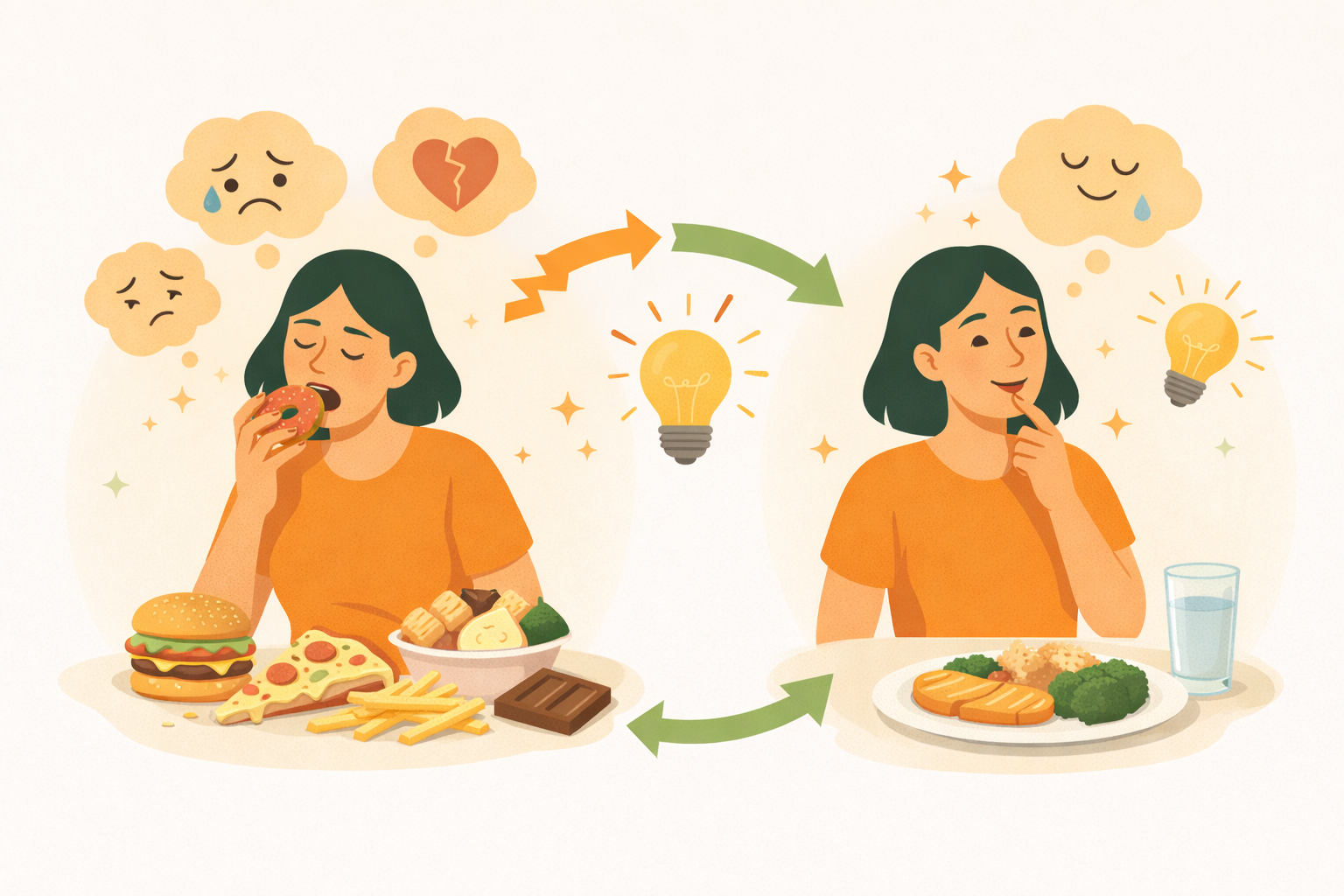
Emotional eating is a pattern many people experience at some point in their lives. It happens when food is used to cope with emotions rather than to satisfy physical hunger. Stress, boredom, loneliness, anxiety, or even happiness can all trigger eating that feels automatic and difficult to control. Research from Harvard Medical School, the American Psychological Association, the National Institutes of Health, and Stanford University shows that emotional eating is closely tied to stress regulation, habit loops, and brain reward systems.
Emotional eating is not a failure of willpower. It is a learned response shaped by biology, psychology, and environment. Understanding how and why it happens is the first step toward breaking the cycle.
If you’re exploring the relationship between food and mood, you may also find this helpful:
Foods That Are Linked to Better Mood and Energy
What Is Emotional Eating?
Emotional eating refers to eating in response to emotions rather than physical hunger. The body does not need fuel, but the mind seeks comfort, distraction, or relief.
Common emotional eating triggers include:
- stress or overwhelm
- anxiety or nervousness
- boredom or restlessness
- loneliness or sadness
- celebration or reward
Because food temporarily soothes the nervous system, emotional eating can feel helpful in the moment—even if it leads to guilt or discomfort later.
The Brain Science Behind Emotional Eating
Emotional eating is strongly influenced by the brain’s reward system. Highly palatable foods—especially those high in sugar, fat, or salt—activate dopamine pathways that create feelings of pleasure and relief.
Harvard research shows that stress increases cravings for these foods because they temporarily lower cortisol and activate reward centers in the brain.
Over time, the brain learns to associate certain emotions with eating, creating an automatic habit loop.
Stress, Cortisol, and Cravings
Stress plays a major role in emotional eating. When stress activates the hypothalamic-pituitary-adrenal (HPA) axis, cortisol levels rise.
NIH research links elevated cortisol to increased appetite and preference for calorie-dense foods.
This explains why emotional eating often occurs during:
- work pressure
- emotional conflict
- sleep deprivation
- chronic mental overload
For a deeper look at stress physiology, explore:
The Stress Response: How It Works & What Helps
Emotional Hunger vs Physical Hunger
Learning to distinguish emotional hunger from physical hunger is key to breaking the cycle.
Physical hunger:
- builds gradually
- is satisfied by many foods
- stops when full
Emotional hunger:
- comes on suddenly
- craves specific foods
- persists despite fullness
Awareness—not restriction—is what creates change.
Why Willpower Alone Doesn’t Work
Many people try to stop emotional eating through strict control. Unfortunately, this often backfires.
APA research shows that restriction increases stress and strengthens cravings, making emotional eating more likely.
Breaking the cycle requires regulation, not punishment.
The Role of the Nervous System
Emotional eating is a nervous system response. Food provides comfort by activating the parasympathetic nervous system.
This is why emotional eating often follows emotional dysregulation.
Learning alternative ways to regulate the nervous system reduces reliance on food.
Explore grounding techniques here:
Grounding Exercises for Daily Use
Mindfulness and Emotional Eating
Mindfulness interrupts autopilot eating by bringing awareness to the present moment.
NIH research shows mindfulness-based eating practices reduce binge and emotional eating behaviors.
Mindfulness helps by:
- slowing impulsive responses
- increasing emotional awareness
- reducing shame and judgment
Explore mindful awareness tools:
Daily Mindfulness Prompts
Common Emotional Eating Triggers
Identifying personal triggers creates choice.
Common triggers include:
- work stress
- social pressure
- fatigue
- unstructured time
- negative self-talk
Awareness reduces automatic behavior.
How Sleep Affects Emotional Eating
Sleep deprivation disrupts hunger hormones, increasing ghrelin and reducing leptin.
NIH studies show poor sleep increases emotional reactivity and cravings.
Supporting sleep supports eating balance.
Related reading:
Sleep Hygiene Tips for a More Restful Night
The Gut-Brain Connection
Gut health influences mood and cravings. Imbalances in gut bacteria affect neurotransmitter production and stress response.
Learn more here:
Gut-Brain Connection Explained
Practical Steps to Break the Emotional Eating Cycle
1. Pause Before Eating
Take a brief pause and ask: “What am I feeling right now?”
2. Name the Emotion
Labeling emotions reduces their intensity.
3. Offer an Alternative Response
Options include breathing, movement, or connection.
4. Eat Without Judgment
Shame strengthens the cycle. Compassion weakens it.
Healthy Alternatives to Emotional Eating
- short walks
- deep breathing
- journaling
- stretching
- talking to someone
Explore journaling as a tool:
Journaling Prompts for Self-Discovery
Food as Comfort Is Not the Enemy
Food is naturally comforting. The goal is not to eliminate comfort eating entirely, but to expand coping options.
Flexibility leads to sustainability.
When Emotional Eating Signals Deeper Needs
Persistent emotional eating may signal unresolved stress, emotional exhaustion, or unmet needs.
Professional support can be helpful when patterns feel unmanageable.
Building a Supportive Eating Environment
Environment shapes behavior.
Helpful changes include:
- regular meal patterns
- balanced meals
- reduced eating distractions
Progress Over Perfection
Breaking the emotional eating cycle is gradual.
Each moment of awareness is progress.
Final Thoughts
Emotional eating is not a flaw—it is a learned response to emotional discomfort. By understanding the brain, nervous system, and emotional triggers involved, you can begin to respond with awareness instead of habit.
Breaking the cycle does not require strict control. It requires curiosity, compassion, and consistent support.
Over time, emotional eating loses its grip as new ways of regulating emotions take root.
More supportive guides from MindBloomDaily:
How to Reframe Negative Thoughts
How Some People Cope With Anxiety Without Medication
For people who care too much
A five-minute refresh, every day.
If this gave you a moment of calm, MindBloom Pro sends ten small positive things to your dashboard each morning — chosen for the family life you're actually living.

Discussion
Comments
Sign in to join the conversation.
Sign inLoading comments…