


Table of contents18 sections · tap to expandShowHide
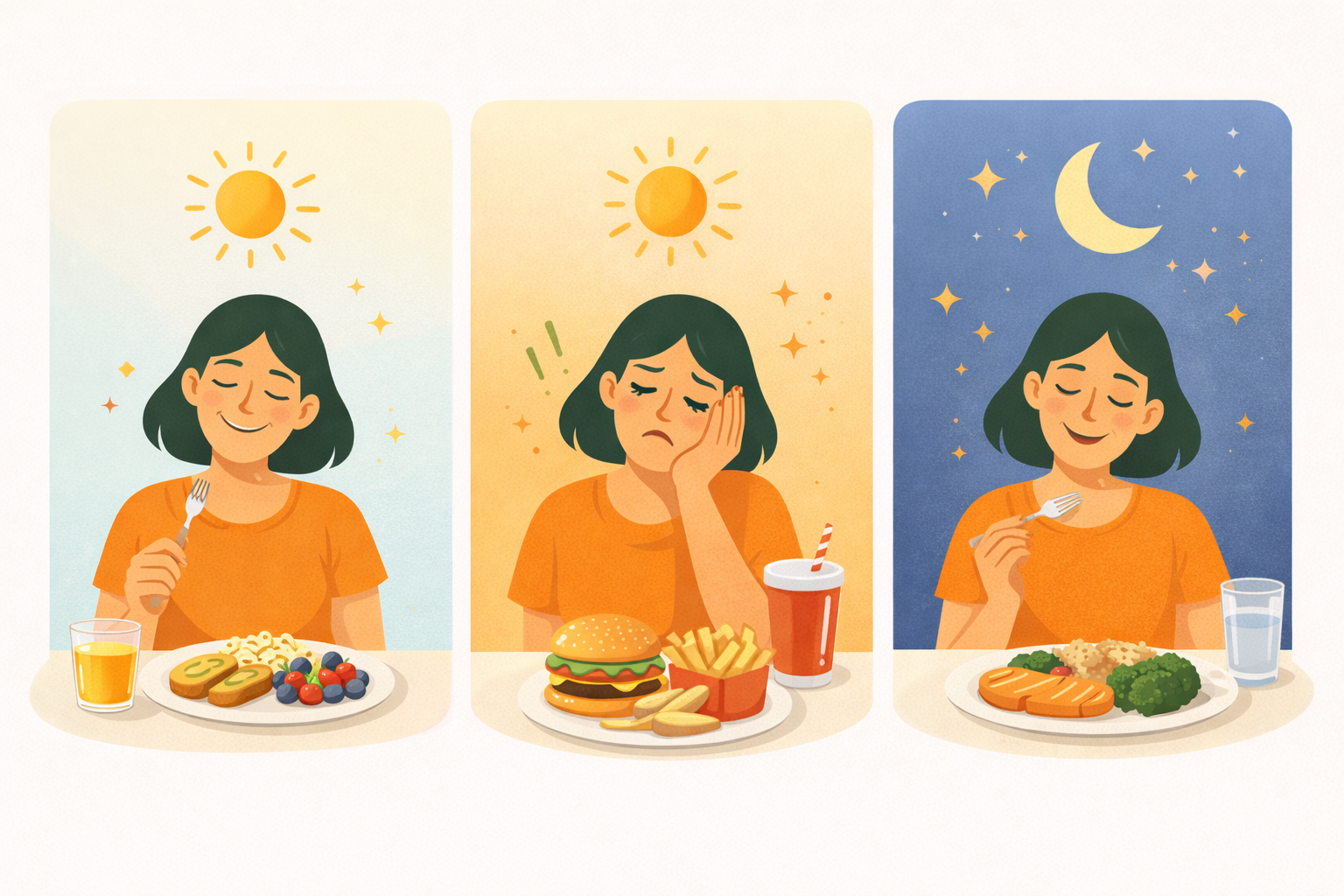
What you eat matters for mental health — but when you eat may matter just as much. Meal timing plays a significant role in mood regulation, energy stability, and emotional resilience. Research from Harvard Medical School, the National Institutes of Health, the American Psychological Association, and Stanford University shows that irregular eating patterns can disrupt blood sugar, hormones, and neurotransmitters that influence how we feel throughout the day.
Many people focus on food quality while overlooking meal timing. Yet skipped meals, long gaps between eating, and late-night eating can quietly affect mood, irritability, anxiety, and mental clarity.
If you’re exploring nutrition from a mental wellness perspective, you may also find this helpful:
Foods That Are Linked to Better Mood and Energy
Why Meal Timing Matters for Mood
The brain relies on a steady supply of glucose for energy. When meals are skipped or delayed, blood sugar drops, triggering stress hormones such as cortisol and adrenaline.
NIH-supported research shows that blood sugar fluctuations are closely linked to mood swings, anxiety, irritability, and difficulty concentrating.
Consistent meal timing helps stabilize:
- blood glucose levels
- stress hormone release
- neurotransmitter production
- energy availability to the brain
The Brain’s Dependence on Regular Fuel
Unlike muscles, the brain cannot store energy. It depends on a continuous supply of glucose from the bloodstream.
Harvard research explains that when glucose availability drops, the brain interprets this as a stress signal, activating the body’s fight-or-flight response.
This can lead to:
- irritability
- low mood
- difficulty focusing
- emotional reactivity
Skipping Meals and Emotional Regulation
Skipping meals is commonly associated with low energy, but its emotional effects are often overlooked.
APA research shows that hunger increases emotional sensitivity and reduces patience, making people more reactive to stress.
This phenomenon is sometimes called “hanger,” but it reflects real neurochemical changes rather than personality flaws.
Blood Sugar Swings and Mood Instability
Large gaps between meals can cause blood sugar to spike and crash, especially when meals are high in refined carbohydrates.
These fluctuations can trigger:
- anxiety-like symptoms
- sudden fatigue
- low motivation
- brain fog
For cognitive symptoms linked to energy crashes, explore:
Brain Fog Explained: Causes & Relief
Meal Timing and Cortisol Rhythms
Cortisol follows a natural daily rhythm, peaking in the morning and gradually declining throughout the day.
Irregular eating can disrupt this rhythm, leading to elevated cortisol later in the day.
NIH research links elevated cortisol to anxiety, sleep disruption, and emotional exhaustion.
Breakfast Timing and Emotional Stability
Eating a balanced breakfast within a few hours of waking supports blood sugar stability and neurotransmitter production.
Harvard studies show that people who eat breakfast regularly report better mood regulation and lower stress levels.
Explore supportive breakfast ideas here:
Balanced Breakfast Ideas for Mental Clarity
Lunch Timing and Afternoon Mood Slumps
Long delays between breakfast and lunch often lead to afternoon fatigue and irritability.
Balanced midday meals help prevent energy crashes and emotional dips.
Stanford research shows that stable midday nutrition supports sustained attention and mood balance.
Evening Eating and Emotional Regulation
Late-night eating can disrupt circadian rhythms and sleep quality.
Poor sleep directly affects mood regulation the following day.
NIH research links late eating to increased nighttime cortisol and reduced melatonin production.
For evening habits that support calm, see:
Evening Routines That Promote a Calm Mind
Meal Timing and Anxiety
Anxiety symptoms often worsen when blood sugar drops.
The body may interpret low glucose as danger, triggering anxiety responses.
Regular meals help reduce physiological anxiety triggers.
Related reading:
The Link Between Gut Health and Anxiety
Intermittent Fasting and Mood
Intermittent fasting affects individuals differently.
While some report mental clarity, others experience irritability, anxiety, or low mood.
APA research suggests that people with high stress or anxiety sensitivity may respond poorly to prolonged fasting windows.
Personal context matters.
Meal Timing and the Gut-Brain Connection
Regular eating patterns support gut microbiome balance.
Irregular meals can disrupt gut bacteria rhythms, affecting neurotransmitter production.
Learn more here:
Gut-Brain Connection Explained
How Consistent Meal Timing Supports Mental Energy
Consistency matters more than perfection.
Regular meals help:
- reduce mood swings
- improve focus
- support emotional resilience
- reduce stress-related cravings
For non-caffeinated energy support, see:
Caffeine Alternatives for Focus
Meal Timing and Emotional Eating
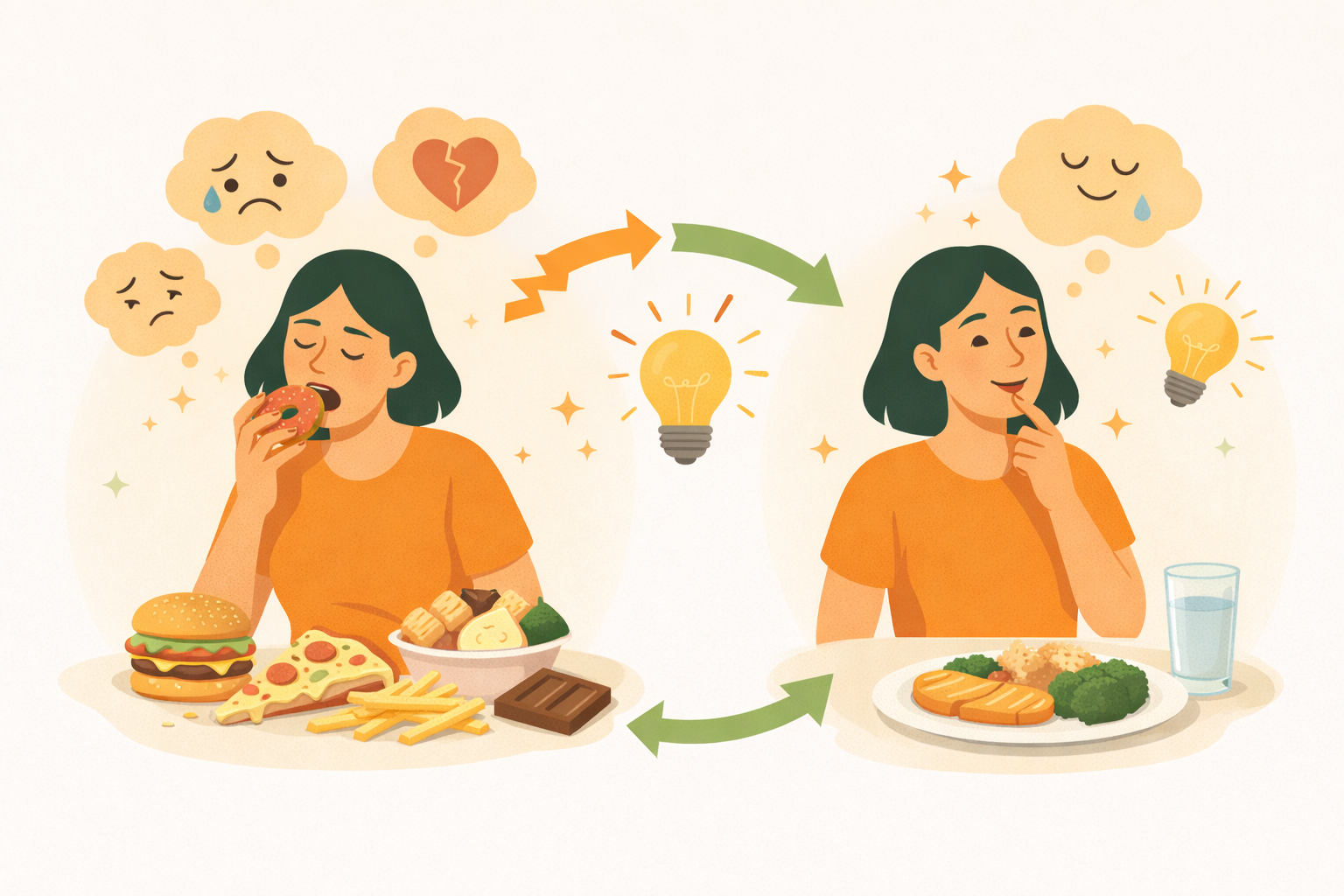
Irregular eating increases the likelihood of emotional eating.
When the body is under-fueled, emotional regulation becomes harder.
Regular meals reduce vulnerability to emotional eating episodes.
Explore this topic further:
Emotional Eating and How to Break the Cycle
Practical Meal Timing Guidelines
- eat within a consistent daily window
- avoid long gaps between meals
- balance meals with protein, fat, and fiber
- support evening meals that don’t disrupt sleep
Listening to Your Body’s Signals
Hunger, energy dips, and irritability are signals — not failures.
Responding early prevents emotional and physiological stress.
Common Myths About Meal Timing
- Myth: Skipping meals improves discipline
Reality: It increases stress - Myth: Late meals don’t matter
Reality: Timing affects hormones - Myth: Everyone thrives on the same schedule
Reality: Individual rhythms differ
When to Seek Professional Guidance
If mood swings, anxiety, or fatigue persist despite regular meals, professional guidance can help identify underlying issues.
Final Thoughts
Meal timing is a powerful but often overlooked factor in mood regulation. By eating consistently and supporting the brain’s need for steady fuel, you create a foundation for emotional balance and mental clarity.
Small adjustments in when you eat can lead to meaningful improvements in how you feel.
More nutrition and mood guides from MindBloomDaily:
How Sugar Affects Your Mental State
Brain-Friendly Nutrients to Know
For people who care too much
A five-minute refresh, every day.
If this gave you a moment of calm, MindBloom Pro sends ten small positive things to your dashboard each morning — chosen for the family life you're actually living.

Discussion
Comments
Sign in to join the conversation.
Sign inLoading comments…