


Table of contents17 sections · tap to expandShowHide
People express and experience love in different ways. While one person may feel deeply cared for through words, another may value actions or shared time more strongly. This idea is often described through “love languages,” a framework that helps explain how individuals give and receive affection. Research from Harvard Medical School, the American Psychological Association, the National Institutes of Health, and Stanford University suggests that understanding emotional expression styles plays a significant role in relationship satisfaction and emotional security.
Although the concept of love languages originated in popular psychology, many of its principles align with established research on attachment, communication, and emotional validation. At its core, love languages reflect how people interpret care, attention, and commitment.
If you’re interested in strengthening emotional connection, you may also find this helpful:
The Role of Empathy in Relationships
What Are Love Languages?
Love languages describe preferred ways people express and receive affection. While individuals may appreciate all forms of care, most people have one or two primary ways that make them feel most valued.
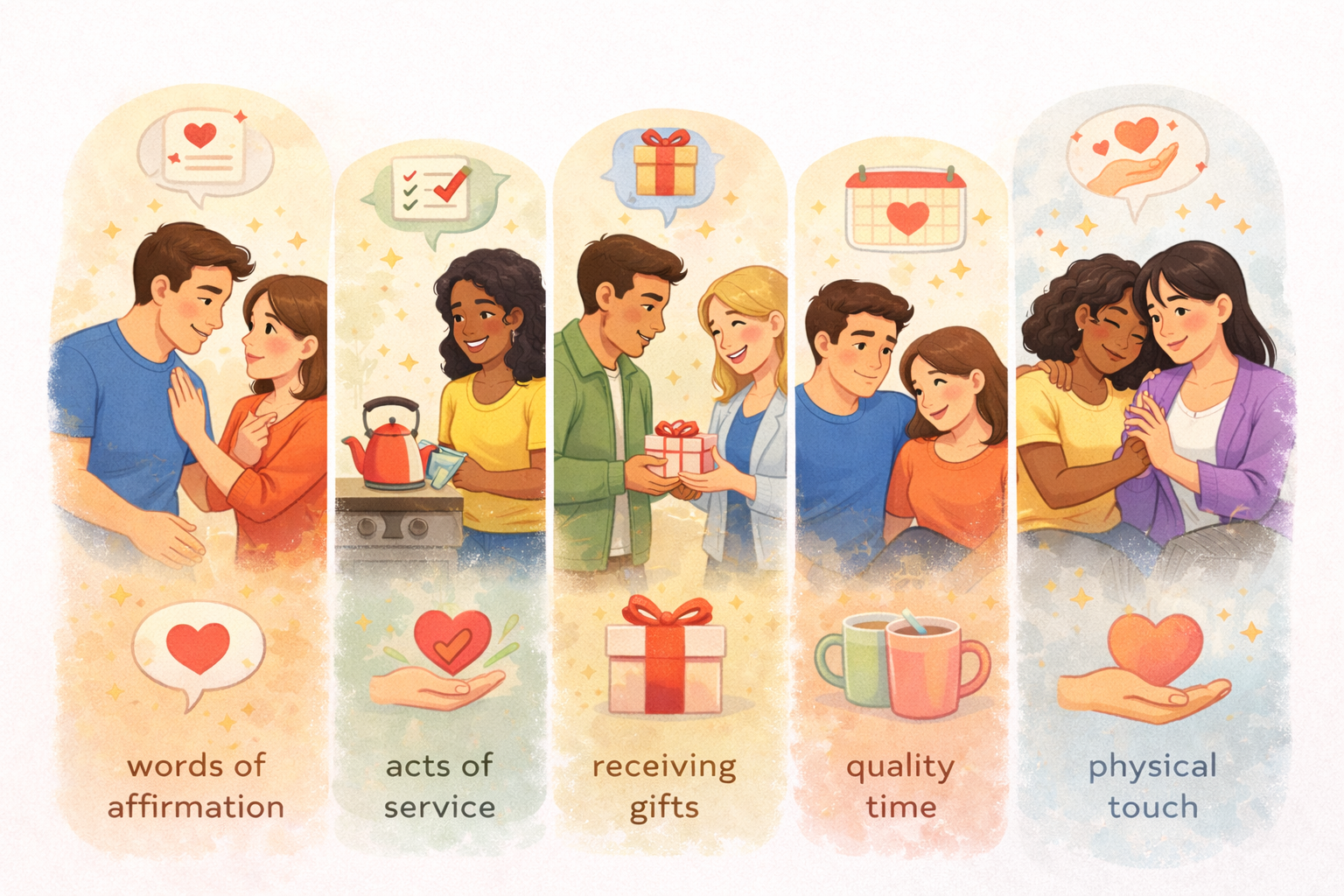
The commonly discussed love languages include:
- words of affirmation
- quality time
- acts of service
- physical touch
- receiving gifts
These categories reflect broader emotional needs rather than rigid personality traits.
The Psychological Foundation Behind Love Languages
From a psychological perspective, love languages relate closely to attachment theory, emotional regulation, and social bonding.
Harvard research shows that feeling understood and emotionally validated activates reward pathways in the brain. When affection is expressed in a way that aligns with someone’s emotional preferences, it strengthens feelings of security and connection.
Love languages function as emotional signals—communicating safety, commitment, and belonging.
Words of Affirmation: The Power of Verbal Validation
For people who value words of affirmation, spoken or written expressions of care are deeply meaningful.
This may include:
- verbal appreciation
- encouragement
- expressions of gratitude
- affirming messages
APA research indicates that positive verbal feedback supports self-esteem and emotional bonding.
For these individuals, silence or criticism may feel particularly painful.
Quality Time: Presence as a Form of Love
Quality time emphasizes shared attention and presence.
People who value this love language feel most connected when they experience undivided attention.
This may include:
- meaningful conversations
- shared activities
- focused listening
Stanford research shows that sustained attention and active listening strengthen emotional bonds and trust.
Distractions or emotional unavailability can feel especially disconnecting for these individuals.
Acts of Service: Love Through Action
Acts of service involve expressing care through helpful actions.
This may include:
- helping with tasks
- offering support during stress
- anticipating needs
NIH-supported research shows that cooperative behavior and practical support strengthen relational resilience.
For these individuals, actions speak louder than words.
Physical Touch: Connection Through Sensory Experience
Physical touch includes affectionate contact such as hugs, hand-holding, or closeness.
Touch plays a critical role in emotional regulation.
Harvard studies show that physical touch releases oxytocin, a hormone linked to bonding and stress reduction.
For people who value this love language, physical closeness communicates reassurance and care.
Receiving Gifts: Symbolic Expressions of Care
Receiving gifts is often misunderstood as materialistic, but psychologically, it reflects symbolic meaning.
Gifts represent thoughtfulness, effort, and remembrance.
APA research suggests that symbolic gestures strengthen emotional memory and perceived commitment.
The emotional value lies in intention rather than cost.
Love Languages and Emotional Needs
Each love language aligns with fundamental emotional needs:
- affirmation supports self-worth
- presence supports security
- help supports safety
- touch supports connection
- symbols support meaning
Understanding these needs helps reduce miscommunication.
Why Love Languages Often Cause Misunderstanding
Conflict often arises when people express love in ways they personally value, rather than how their partner receives it.
For example, offering practical help may not feel loving to someone who values verbal affirmation.
Recognizing differences prevents unintentional emotional neglect.
Related reading:
Assertive vs. Aggressive Communication
Love Languages and Attachment Styles
Attachment theory provides insight into why love languages develop.
Early experiences shape how individuals seek reassurance and closeness.
Secure attachment supports flexibility in giving and receiving love.
Anxious or avoidant patterns may intensify reliance on specific love expressions.
Can Love Languages Change?
Love languages are not fixed.
Life experiences, stress levels, and relationship dynamics can shift preferences.
Awareness allows adaptation rather than rigidity.
Love Languages in Long-Term Relationships
In long-term relationships, love languages help maintain emotional connection.
Consistent expression aligned with emotional needs supports satisfaction and trust.
Research shows that couples who adapt to each other’s emotional preferences experience stronger bonds.
Love Languages and Conflict
During conflict, unmet emotional needs often surface.
Understanding love languages helps partners interpret emotional reactions more accurately.
For conflict strategies, explore:
Handling Conflict Mindfully
Applying Love Languages Mindfully
Using love languages mindfully involves:
- curiosity rather than assumption
- clear communication of needs
- consistent effort
Mindfulness prevents transactional behavior.
Common Myths About Love Languages
- Myth: One love language defines everything
Reality: Most people value multiple forms - Myth: Love languages excuse neglect
Reality: They require mutual effort - Myth: Love languages eliminate conflict
Reality: They support understanding
When Love Languages Are Not Enough
While helpful, love languages cannot replace respect, trust, or emotional safety.
Healthy relationships require boundaries, communication, and accountability.
Learn more here:
How to Set Boundaries Without Guilt
Final Thoughts
The psychology of love languages highlights the importance of emotional attunement and understanding. They offer a framework for recognizing how people experience care and connection.
When approached with flexibility and empathy, love languages strengthen communication and deepen relationships.
Love is not just about intention—it is about perception, presence, and responsiveness.
More relationship insights from MindBloomDaily:
Trust Building Habits
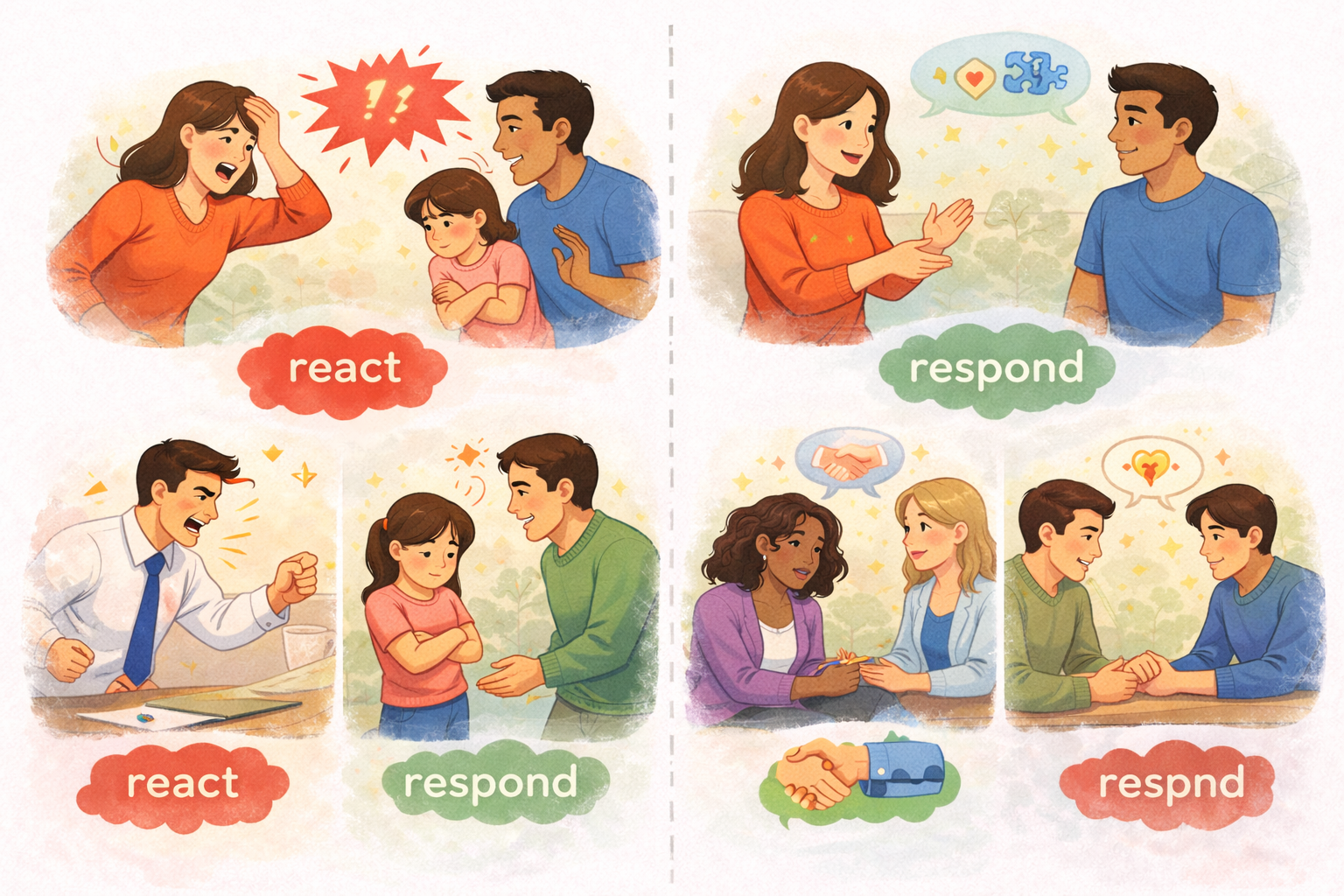
How to Respond Instead of React
For people who care too much
A five-minute refresh, every day.
If this gave you a moment of calm, MindBloom Pro sends ten small positive things to your dashboard each morning — chosen for the family life you're actually living.

Discussion
Comments
Sign in to join the conversation.
Sign inLoading comments…