


Table of contents21 sections · tap to expandShowHide
Many people begin meditation with good intentions, only to find themselves drifting off or falling asleep entirely. While relaxation is a natural outcome of meditation, sleepiness can prevent the practice from delivering its full mental benefits. Research from Harvard Medical School, the National Institutes of Health, the American Psychological Association, and Stanford University shows that effective meditation requires a balance between relaxation and alert awareness.
Falling asleep during meditation does not mean you are doing it wrong. It often signals fatigue, nervous system overload, or a mismatch between posture, timing, and technique. With a few adjustments, meditation can become both calming and mentally clear.
If you are new to meditation, you may find this helpful as a foundation:
What Is Mindfulness and How to Start?
Why People Fall Asleep During Meditation
Sleepiness during meditation is common, especially for beginners. Meditation lowers nervous system arousal, which can unmask accumulated fatigue.
According to NIH research, the most common reasons people fall asleep during meditation include:
- chronic sleep deprivation
- meditating while lying down
- low mental stimulation
- poor posture
- meditating at night
Meditation reveals the body’s true state. If the body is exhausted, sleepiness is a natural response.
The Difference Between Relaxation and Sleep
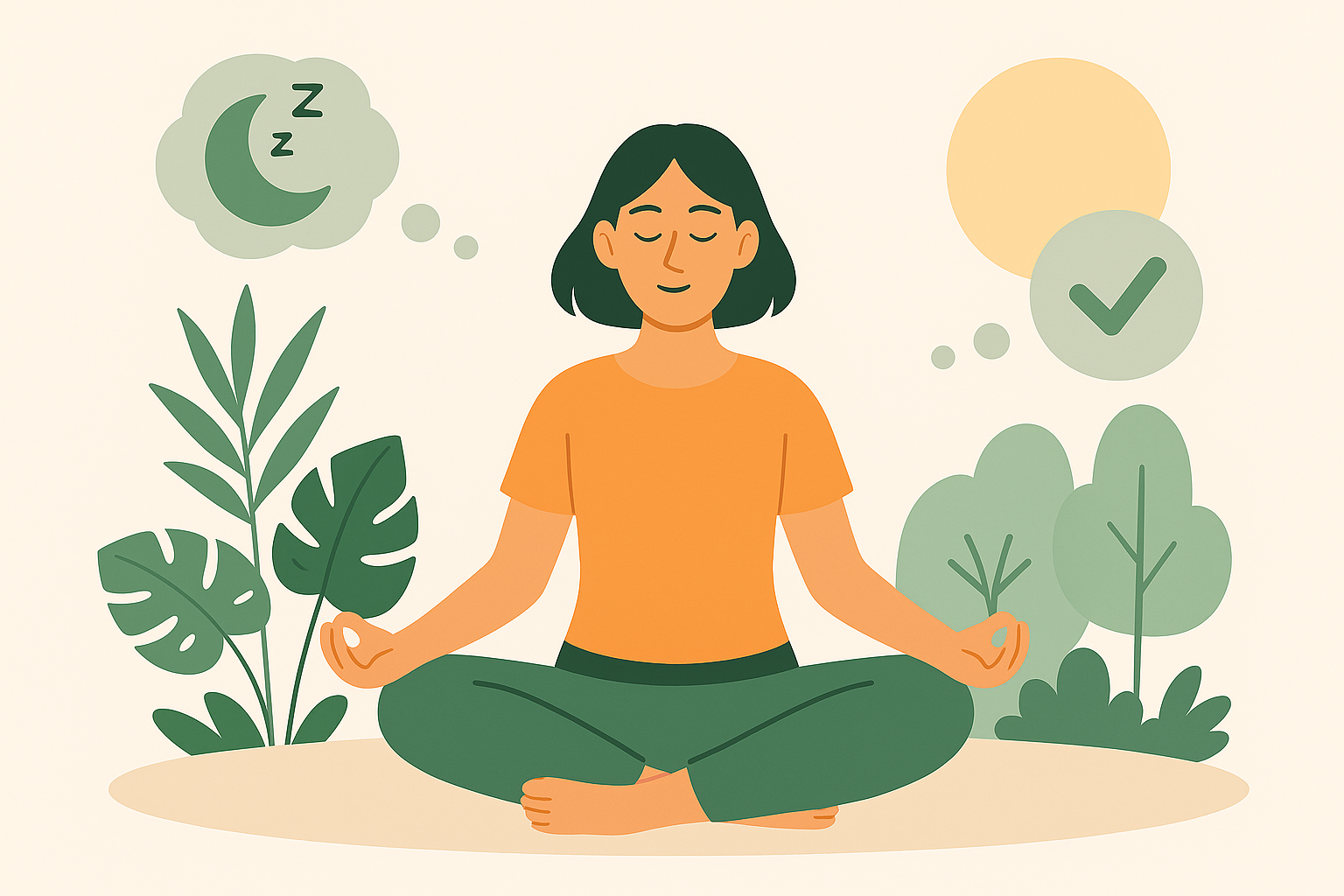
Relaxation and sleep share physiological similarities, but they are not the same. Meditation aims for relaxed alertness—a state where the body is calm but the mind remains awake.
Harvard research describes this as the “relaxation response” combined with cognitive engagement.
When alertness drops too low, meditation turns into a nap.
Choose the Right Posture
Posture plays a major role in staying awake during meditation.
Sitting vs Lying Down
Lying down increases the likelihood of sleep. Sitting upright signals alertness to the brain.
Good sitting posture includes:
- spine upright but not rigid
- feet grounded on the floor
- hands resting comfortably
- head balanced over shoulders
For grounding posture awareness, see:
Grounding Exercises for Daily Use
Time Your Meditation Wisely
The time of day matters. Meditating late at night or after meals increases drowsiness.
Many people find morning or mid-day meditation more alert and focused.
If meditation consistently makes you sleepy, experiment with timing rather than abandoning the practice.
Use Open-Eye Meditation
Closing the eyes reduces sensory input, which can encourage sleep.
Open-eye meditation—softly gazing downward—maintains alertness while remaining calm.
This approach is commonly used in Zen meditation and supported by mindfulness research.
Engage the Breath Actively
Passive breathing can lead to drifting. Active breath awareness keeps the mind engaged.
NIH research shows that slightly deeper breathing improves alertness.
Techniques That Promote Wakefulness
- counting breaths
- lengthening inhales slightly
- noticing breath texture and temperature
For structured breathing techniques, explore:
Using Breath to Anchor the Mind
Choose the Right Meditation Style
Some meditation styles are more energizing than others.
- Focused attention meditation: improves alertness
- Body scan meditation: deeply relaxing, may induce sleep
- Open monitoring meditation: balances awareness and calm
If body scans make you sleepy, try shorter sessions or alternate styles.
Learn more about styles here:
Guided vs. Silent Meditation: Which Is Best?
Increase Sensory Awareness
Engaging the senses keeps meditation vivid and awake.
Try noticing:
- ambient sounds
- air on the skin
- contact points with the chair or floor
This anchors attention in the present.
Shorten Your Sessions
Long sessions increase the chance of sleep, especially for beginners.
Research shows that 5–10 minutes of consistent meditation is more effective than longer, inconsistent sessions.
Explore short practices here:
5-Minute Meditations for Busy People
Address Underlying Fatigue
If meditation repeatedly leads to sleep, it may indicate a need for rest.
Sleep quality affects meditation quality. NIH research confirms that sleep deprivation impairs attention regulation.
Explore sleep support here:
Sleep Hygiene Tips for a More Restful Night
Use Gentle Mental Labels
Labeling experiences keeps the mind engaged.
Examples include:
- “breathing”
- “hearing”
- “thinking”
This technique is supported by mindfulness-based cognitive therapy.
Adjust Your Environment
Environment influences alertness.
Helpful adjustments include:
- meditating in a well-lit space
- cooler room temperature
- upright seating
Understand Hypnagogic States
Between wakefulness and sleep is a transitional state where imagery or drifting occurs. Meditation can enter this zone unintentionally.
Recognizing this state allows you to gently re-engage awareness.
Mindfulness vs Sleep Training
Meditation is not a sleep replacement. If sleep deprivation is present, meditation alone cannot compensate.
Meditation enhances awareness; sleep restores the body.
When Sleep During Meditation Is Okay
Occasional sleep during meditation is not harmful.
It may indicate:
- deep relaxation
- emotional release
- recovery from exhaustion
The key is intention. If your goal is awareness, adjust accordingly.
Building Alert Awareness Over Time
Alertness improves with practice. Meditation trains both relaxation and attention.
Stanford research shows that attentional stability increases with consistent mindfulness practice.
Pair Meditation with Movement
Light movement before meditation improves alertness.
Examples include:
- gentle stretching
- brief walking
- postural adjustments
Mindfulness Without Force
Trying too hard to stay awake can create tension.
The goal is balanced awareness, not rigid control.
Final Thoughts
Falling asleep during meditation is common and understandable. It reflects the body’s need for rest or the mind’s tendency to associate stillness with sleep.
By adjusting posture, timing, technique, and awareness, meditation can become both calming and mentally clear.
With practice, meditation trains the ability to rest deeply without losing awareness—one of the most valuable mental skills you can develop.
More meditation guides from MindBloomDaily:
Guided vs. Silent Meditation: Which Is Best?
The Science Behind Meditation and Brain Changes
For people who care too much
A five-minute refresh, every day.
If this gave you a moment of calm, MindBloom Pro sends ten small positive things to your dashboard each morning — chosen for the family life you're actually living.



Discussion
Comments
Sign in to join the conversation.
Sign inLoading comments…