


Table of contents22 sections · tap to expandShowHide
Sleep is one of the most essential forces behind your mental clarity, emotional balance, energy levels, and overall health. Yet millions of people struggle every night — either taking too long to fall asleep, waking up frequently, or feeling unrested even after hours in bed.
Understanding why sleep becomes difficult is the first step to fixing it. Research from neuroscience, psychology, and sleep medicine reveals clear patterns behind insomnia, restless nights, and inconsistent sleep cycles. The good news: small, realistic changes can make a major difference.
This article breaks down the most common sleep challenges and the science-backed fixes that help restore restful nights.
Stress and Mental Overactivity Before Bed
Research from Harvard Medical School – Sleep and Mental Health shows that stress activates the amygdala (the brain’s threat center), making it harder for the body to shift into a calm, sleep-ready state. When stress increases at night — often because the day finally becomes quiet — the brain stays alert even if the body feels tired.
This causes:
-
Racing thoughts
-
Overthinking conversations or tasks
-
Heightened emotional sensitivity
-
Trouble “switching off”
-
Difficulty falling or staying asleep
Stress keeps cortisol levels higher than normal at night, blocking melatonin — the hormone that signals the body to sleep.
Next Up:
How Deep Breathing Can Help Calm the Mind
Screen Time and Blue Light Exposure
Research from Harvard Medical School – Blue Light and Sleep explains that the blue light emitted from phones, tablets, and computers suppresses melatonin production. Melatonin usually rises naturally in the evening, helping the body recognize nighttime, but blue light confuses the brain into thinking it’s still daytime.
This results in:
-
Delayed sleep
-
Difficulty falling asleep
-
Nighttime alertness
-
Fragmented sleep
Even “night mode” reduces only part of the blue spectrum, meaning scrolling before bed still interferes with natural circadian rhythms.
Next Up:
Digital Detox for Mental Sharpness
Caffeine and Late-Day Stimulants
Research from the National Sleep Foundation – Caffeine and Sleep shows that caffeine has a half-life of up to 6 hours, meaning half of what you drink at 4 PM may still be active at 10 PM. Caffeine blocks adenosine receptors — chemicals that create sleep pressure — so the body feels more awake than it truly is.
People sensitive to caffeine may even struggle when they drink it early in the afternoon.
Common sources include:
-
Coffee
-
Energy drinks
-
Soda
-
Pre-workout
-
Chocolate
-
Certain teas
Next Up:
Simple Ways to Improve Focus Without Caffeine
An Overheated or Uncomfortable Sleep Environment
Research from the University of South Australia – Temperature and Sleep shows that body temperature must drop naturally in order to fall asleep. When your room is too warm, the body struggles to regulate this temperature shift.
This results in:
-
Restlessness
-
Frequent waking
-
Difficulty entering deep sleep
-
Morning grogginess
The optimal sleep temperature for most adults is around 65–67°F (18–19°C).
Overthinking at Night
Research from the University of Michigan – Rumination and Sleep Study shows that repetitive thinking (rumination) keeps the brain active long after bedtime. When individuals replay conversations, imagine worst-case scenarios, or worry about future tasks, the nervous system remains alert.
Rumination is a major cause of delayed sleep and middle-of-the-night waking.
Next Up:
The Psychology of Overthinking — And How to Manage It
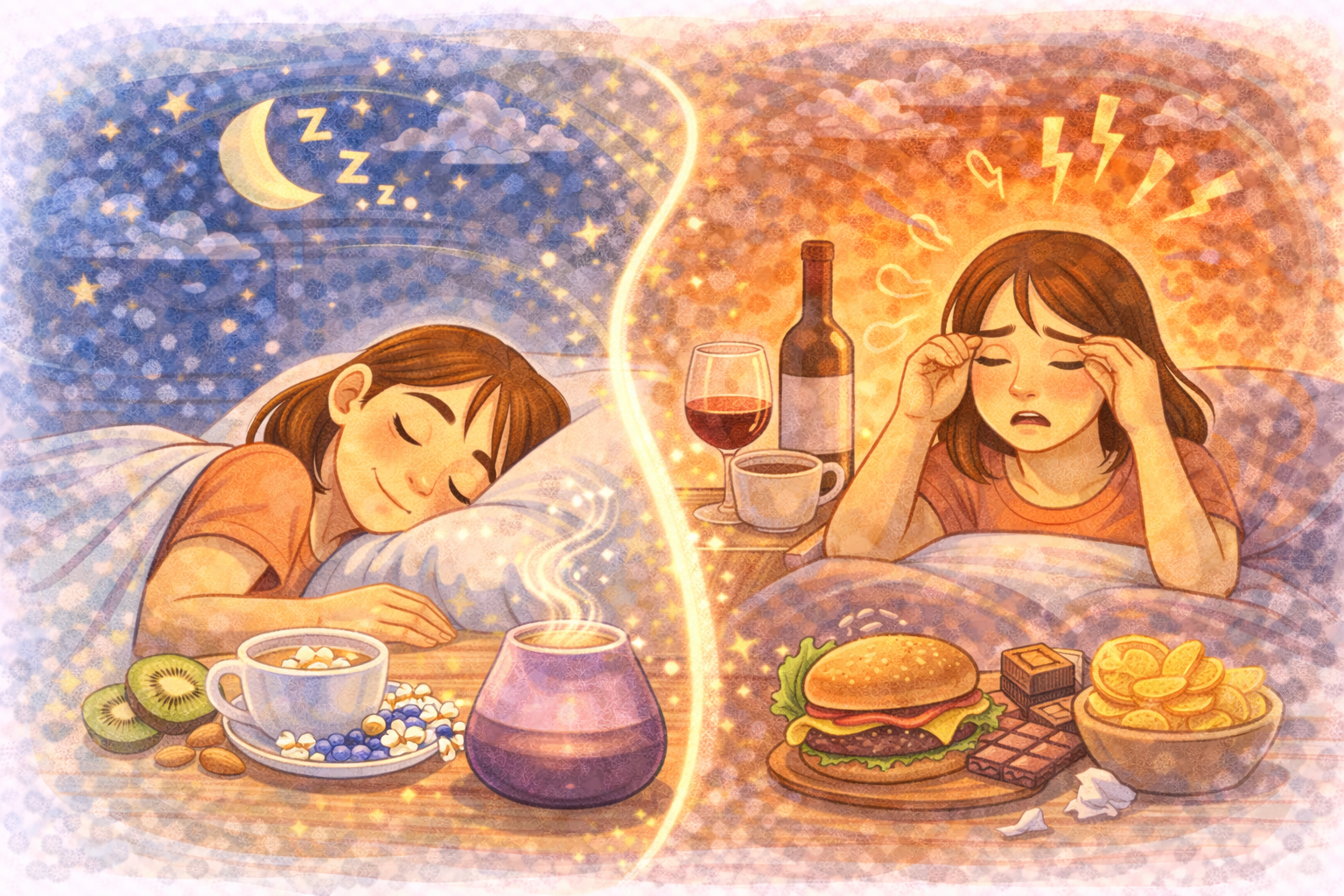
Alcohol and Its Hidden Sleep Disruptions
Research from the Sleep Foundation – Alcohol and Sleep explains that although alcohol may help people fall asleep faster, it disrupts REM sleep — the stage responsible for memory, emotional processing, and mental clarity.
Alcohol also increases nighttime awakenings and reduces sleep quality.
Effects include:
-
Fragmented sleep
-
Early waking
-
Dehydration
-
Snoring or breathing issues
Many people mistakenly believe alcohol helps them sleep; in reality, it lowers sleep quality significantly.
Irregular Sleep Schedule
Research from the National Institute of Mental Health – Circadian Rhythm Study shows that inconsistent sleep times confuse the body’s internal clock. Your circadian rhythm depends on predictable patterns of light, activity, and rest.
When you frequently change your sleep and wake times, you may experience:
-
Difficulty falling asleep
-
Difficulty waking up
-
Daytime sleepiness
-
Reduced REM sleep
Consistency helps the brain anticipate bedtime, making sleep come more naturally.
Next Up:
Evening Routines That Promote a Calm Mind
Breathing Issues or Hidden Sleep Disorders
Research from Mayo Clinic – Sleep Apnea Overview highlights that sleep disorders like sleep apnea prevent deep, restorative sleep. Even if someone sleeps for 7–8 hours, repeated breathing interruptions fragment sleep cycles.
Common signs include:
-
Snoring
-
Morning headaches
-
Daytime fatigue
-
Waking up gasping
-
Trouble staying asleep
This is one of the most overlooked causes of chronic sleep struggles.
Eating Too Close to Bedtime
Research from Johns Hopkins Medicine – Late Eating and Sleep shows that late-night meals increase metabolism, internal temperature, and digestive activity — all of which make it harder to sleep.
Spicy or heavy foods can cause heartburn, which significantly disrupts sleep.
Experts recommend finishing meals 2–3 hours before bed.
Lack of Wind-Down Time
Research from the American Psychological Association – Stress and Sleep Study shows that individuals who do not give themselves transitional time between day activities and bedtime experience higher nighttime stress.
A nighttime wind-down routine helps the brain shift from high alert to rest mode.
This may include:
-
Light stretching
-
Soft music
-
Reading
-
Breathing exercises
-
Warm shower
People who consistently wind down before sleep fall asleep faster and stay asleep longer.
Next Up:
How Some People Cope With Anxiety Without Medication
Small Fixes That Can Make a Big Difference
You don’t need a massive lifestyle overhaul to improve sleep. Small habits create powerful cumulative effects.
Here are practical steps backed by neuroscience and sleep research:
✔ Lower your screen exposure 1–2 hours before bed
Try warm lighting or blue-light–blocking glasses.
✔ Keep your bedroom slightly cool
Around 65–67°F (18–19°C).
✔ Create a consistent sleep schedule
Even on weekends.
✔ Use a pre-sleep wind-down routine
Train your brain to recognize bedtime.
✔ Limit caffeine after early afternoon
Especially if you’re sensitive.
✔ Journal if your mind is racing
It helps release mental pressure.
✔ Reduce alcohol use
Especially close to bedtime.
✔ Get morning sunlight
Helps regulate circadian rhythm.
✔ Declutter your resting space
A calm space supports a calm mind.
✔ Move your body daily
Even 10 minutes helps.
Next Up:
How Decluttering Your Space Affects Your Mind
Final Thoughts
Sleep struggles are incredibly common — and they’re not a personal failure. Your brain and body need the right conditions, rhythms, and signals to rest deeply. Understanding what disrupts your sleep gives you the power to fix it.
The small, science-backed adjustments in this article can help you fall asleep faster, stay asleep longer, and wake up with more energy and clarity.
Your rest matters. And with the right habits, better sleep is absolutely within reach.
For people who care too much
A five-minute refresh, every day.
If this gave you a moment of calm, MindBloom Pro sends ten small positive things to your dashboard each morning — chosen for the family life you're actually living.
Discussion
Comments
Sign in to join the conversation.
Sign inLoading comments…