


Table of contents8 sections · tap to expandShowHide
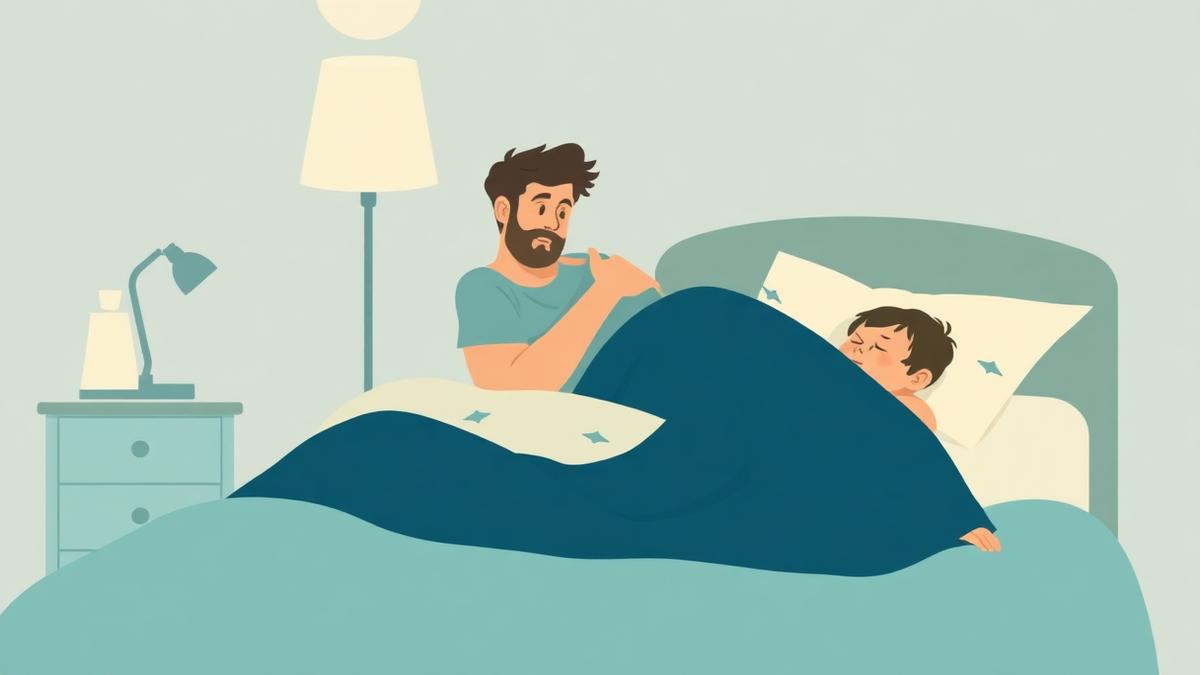
There is a particular kind of tiredness that belongs to the person everyone wakes up. It is not just the hours lost. It is the low hum of readiness that never quite switches off — the part of you that stays half-awake listening for a cough down the hall, a parent who might wander, a teenager who is not home yet. You can be in bed for eight hours and still wake up feeling like you never fully left the room.
If that describes your nights, the standard sleep advice can feel almost insulting. Go to bed earlier. Avoid screens. Keep the room cool. All of it is true, and none of it addresses the actual problem, which is that your sleep is not fully yours. What follows is written for that situation: not a perfect sleep protocol, but a set of moves that protect what sleep you can realistically get.
Start with your wake time, not your bedtime
Most sleep plans fail because they start at the wrong end of the night. Bedtime is the part of your schedule you control least — a sick child, a late shift, a parent who needs settling, and it is gone. Wake time is the part you control most.
Sleep researchers consistently point to a stable wake time as the anchor that keeps your circadian rhythm from drifting. The CDC's sleep guidance and the Mayo Clinic's sleep hygiene recommendations both put consistency ahead of duration for exactly this reason: a body that knows when the day begins gets better at falling asleep when the day ends.
Pick a wake time you can hold roughly seven days a week, including weekends, within about an hour. Not the time you wish you woke up — the time you actually surface most mornings. Then hold it even after a bad night. This feels counterproductive at first. Sleeping in after a 3 a.m. wake-up seems like obvious repair. But catching up in the morning pushes your next night later, which makes the following night worse, and the pattern compounds across the week.
What to do with the bad nights instead
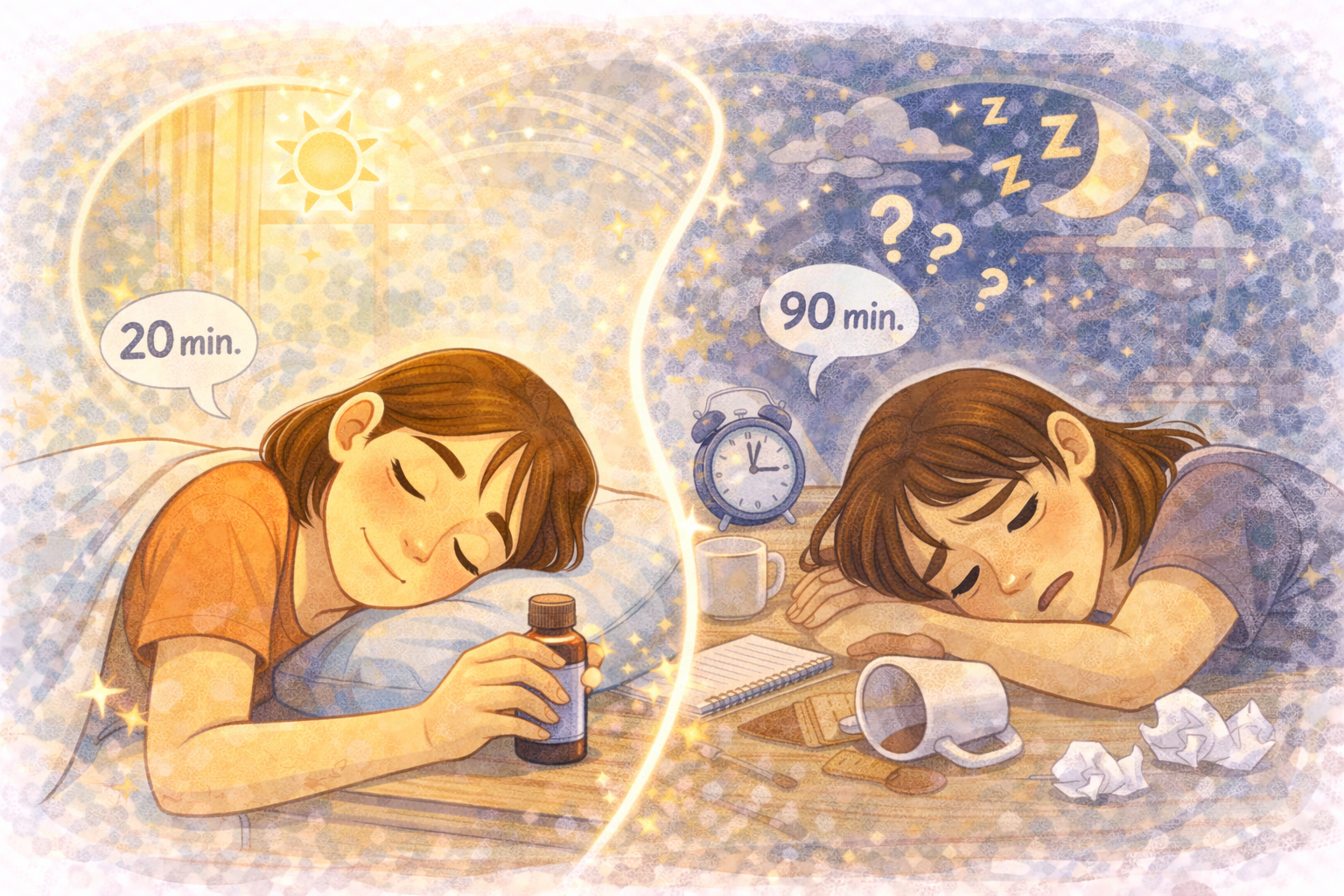
Recover in the afternoon, not the morning. A twenty-minute nap before 3 p.m. restores a meaningful amount of alertness without cutting into your night-time sleep pressure. Longer than about thirty minutes and you risk waking from deep sleep groggy and disoriented, which is worse than not napping at all.
Separate being asleep from being on call
The hardest part of caregiver sleep is not the interruptions. It is the vigilance between them. Your nervous system holds a monitoring posture all night, and that posture keeps you in lighter sleep stages where you wake more easily and remember more of it.
You cannot talk yourself out of vigilance, but you can give it somewhere else to go.
- Delegate the listening, not just the getting up. If there is another adult in the house, splitting nights is more restorative than splitting wake-ups. One person is fully off duty until 2 a.m. and fully on after — as opposed to both of you half-listening all night. Two half-vigilant adults get worse sleep than one alert one.
- Use a monitor deliberately. A baby monitor or a door chime can hold the job your brain is trying to hold. The point is not the technology; it is the permission it gives you to stop listening.
- Write the worry down before bed. Three lines is enough: what is unresolved, what you will do about it tomorrow, and who else could help. Externalizing an open loop reliably reduces the rumination that keeps people awake at the start of the night.
Make the first ten minutes of the night count
Most caregivers have a narrow window between the last task and unconsciousness, and they spend it on a phone. This is understandable — it is often the only unclaimed time in the day — and it is also the single most expensive habit in the whole routine, because it delays sleep onset at precisely the moment when you have the least margin.
The trade you can actually make is not "no phone." It is "phone earlier." Move the scroll to before you brush your teeth, then make the last ten minutes deliberately dull: dim light, a paper book, a shower, stretching on the floor. Boring is the mechanism. Your brain needs a downshift signal, and it does not care whether that signal is meditation or folding laundry.
If you wake at 3 a.m. and cannot get back down
Do not lie there past about twenty minutes. Get up, keep the lights low, do something undemanding in another room, and return when you feel heavy. Staying in bed awake teaches your brain that the bed is a place for thinking. The rule sounds harsh at 3 a.m. but it protects the association that makes every future night easier.
Fix the daytime inputs you actually control
Three daytime levers do most of the work, and none of them require free time you do not have.
Morning light. Ten to fifteen minutes of outdoor light within an hour of waking does more for your sleep timing than almost anything you can do at night. Take the coffee outside. Walk to the corner. Stand at the open door while someone eats breakfast.
Caffeine cut-off. Caffeine has a half-life of roughly five to six hours, meaning a 4 p.m. coffee still has a quarter of its dose active at midnight. Moving your last cup to early afternoon is often worth more than an extra half hour in bed.
Movement, any amount. Regular physical activity is one of the few interventions with strong evidence for improving both sleep quality and the time it takes to fall asleep. It does not have to be exercise in the gym sense — carrying, walking, stairs, and yard work all count.
Lower the standard on purpose
The most useful shift is often psychological. If your benchmark is eight uninterrupted hours, you will fail every night and add anxiety to exhaustion. If your benchmark is "protect the wake time, get outside in the morning, hand off one night a week," you can succeed at something.
Seasons of broken sleep are real and they do end. A newborn phase, a hospital stretch, a parent's decline — these are periods with a shape, not permanent conditions. During them, the goal is not optimization. It is preventing the slow accumulation of debt that turns tiredness into something heavier.
When to ask for more than sleep hygiene
Talk to a clinician if you have trouble sleeping most nights for three months or longer even when the house is quiet, if you snore heavily or wake gasping, if you fall asleep unintentionally during the day, or if low mood and hopelessness are travelling alongside the fatigue. Chronic insomnia and sleep apnea are treatable conditions with established treatments, and persistent exhaustion is also one of the more common early signals of depression. None of those respond to a better bedtime routine alone.
Everything above is general information drawn from public guidance by major clinical bodies, not medical advice for your situation. If sleep loss is affecting your health, your driving, or your ability to care for someone else safely, that is a reason to see a professional, not a personal failure.
For people who care too much
A five-minute refresh, every day.
If this gave you a moment of calm, MindBloom Pro sends ten small positive things to your dashboard each morning — chosen for the family life you're actually living.

Discussion
Comments
Sign in to join the conversation.
Sign inLoading comments…