


Table of contents24 sections · tap to expandShowHide
Social media connects people, shares ideas, and offers moments of inspiration—but without mindful use, it can also drain attention, elevate anxiety, and distort self-perception. Many people do not struggle with social media itself, but with how automatically they engage with it. Research from Harvard Medical School, the American Psychological Association, the National Institutes of Health, and Stanford University shows that mindful digital habits protect emotional wellbeing, focus, and mental clarity.
This social media mindfulness checklist is designed to help you engage intentionally—without guilt, restriction, or digital burnout.
If you’re already working on healthier digital habits, you may also find this helpful:
Protecting Your Mental Energy Online
What Is Social Media Mindfulness?
Social media mindfulness is the practice of being aware of how, why, and when you use social platforms.
It involves noticing emotional responses, attention patterns, and habitual behaviors—without judgment.
Mindful use replaces autopilot scrolling with intentional engagement.
Why Mindfulness Matters Online
Social platforms are designed to capture attention.
Without awareness, users can become emotionally reactive, distracted, or overwhelmed.
Harvard research shows that attention fragmentation increases stress and reduces emotional regulation.
Mindfulness restores choice.
The Hidden Emotional Impact of Social Media
Even brief exposure can influence mood.
Common emotional effects include:
- comparison-based self-doubt
- anxiety from constant updates
- emotional fatigue
- fear of missing out
Awareness reduces their power.
Related reading:
Social Media and Relationship Anxiety
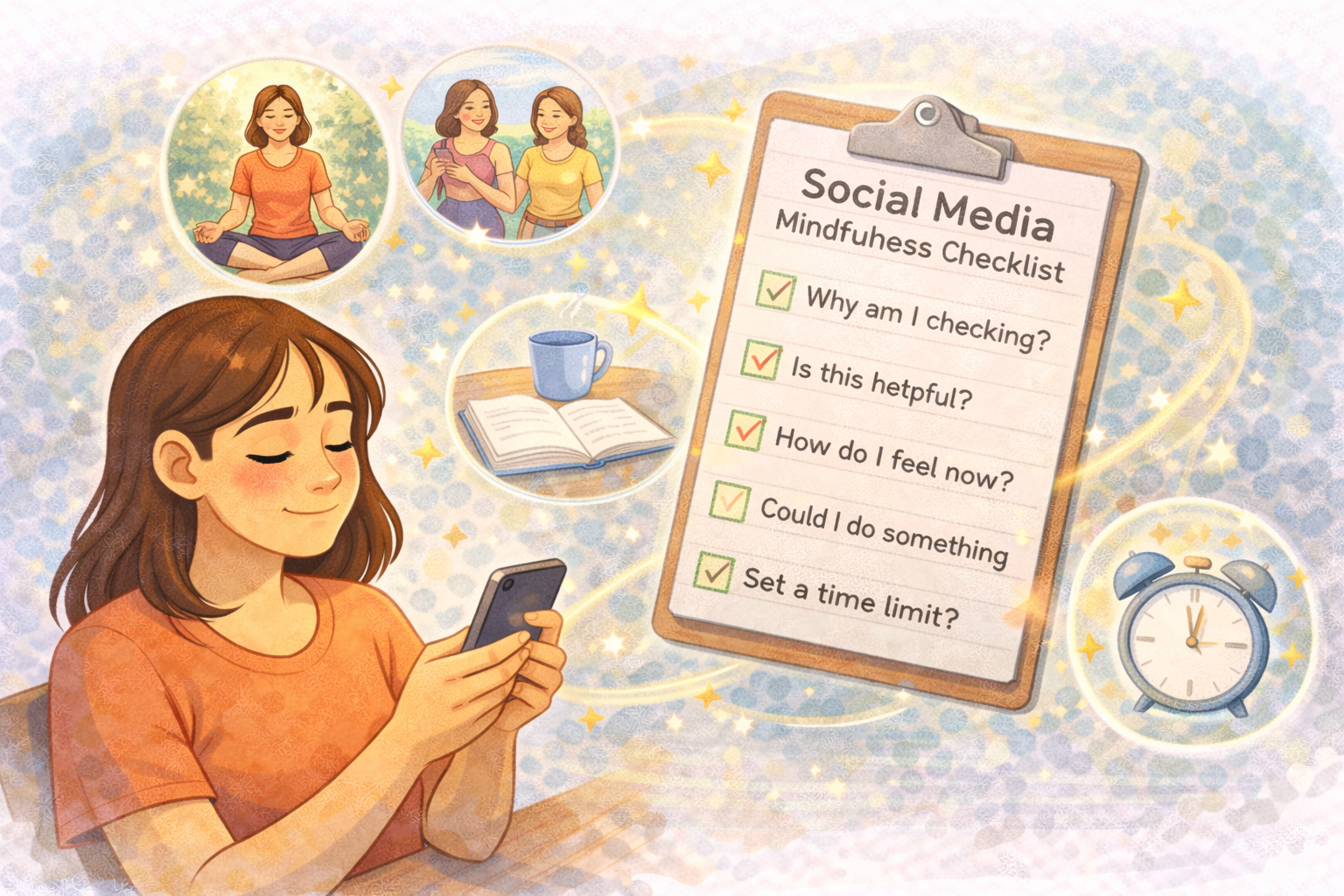
The Social Media Mindfulness Checklist
This checklist is not a set of rules.
It is a set of reflective prompts to guide intentional use.
Checklist Item 1: Pause Before Opening an App
Before opening social media, ask:
- Why am I opening this?
- What do I need right now?
Pausing interrupts automatic behavior.
Checklist Item 2: Notice Emotional Shifts
Pay attention to how you feel while scrolling.
Do you feel calmer—or more tense?
Stanford research shows emotional awareness reduces impulsive engagement.
Checklist Item 3: Limit Reactive Scrolling
Reactive scrolling happens when emotions drive engagement.
Examples include scrolling out of boredom, stress, or loneliness.
Mindfulness allows alternative responses.
Checklist Item 4: Curate Your Feed Intentionally
Your feed shapes your mental environment.
Mindful curation includes:
- unfollowing draining accounts
- muting excessive content
- prioritizing meaningful voices
Digital input influences emotional tone.
Checklist Item 5: Watch for Comparison Triggers
Comparison often happens automatically.
Notice when content triggers self-judgment.
APA research links frequent comparison to anxiety and reduced self-esteem.
Awareness weakens the effect.
Checklist Item 6: Set Gentle Time Boundaries
Mindfulness thrives within limits.
Time boundaries prevent attention depletion.
Helpful approaches include:
- app timers
- scheduled check-ins
- screen-free windows
Related reading:
Reducing Screen Time Without Feeling Deprived
Checklist Item 7: Turn Off Nonessential Notifications
Notifications interrupt attention.
Each alert pulls the brain out of the present moment.
NIH research links frequent interruptions to cognitive fatigue.
Mindfulness is easier with fewer disruptions.
Checklist Item 8: Engage, Don’t Absorb
Passive consumption increases fatigue.
Active engagement—commenting thoughtfully, sharing intentionally—creates meaning.
Quality interaction matters more than quantity.
Checklist Item 9: Notice Body Signals
The body often detects overload before the mind.
Signs include:
- tension
- restlessness
- shallow breathing
Physical awareness supports mindful disengagement.
Checklist Item 10: Avoid Late-Night Scrolling
Nighttime use disrupts sleep and emotional regulation.
Harvard research shows evening screen exposure delays melatonin release.
Related reading:
Creating a Digital Curfew
Checklist Item 11: Reflect After Use
After scrolling, ask:
- Did this add value?
- How do I feel now?
Reflection builds awareness.
Checklist Item 12: Replace, Don’t Just Remove
Mindful reduction works best with replacement.
Alternatives include:
- walking
- journaling
- reading
Related reading:
The Case for Analog Journals
Checklist Item 13: Practice Compassion Toward Yourself
Mindfulness is not perfection.
Slipping into autopilot is normal.
Self-compassion supports sustainable change.
Checklist Item 14: Use Social Media With Intention
Define what social media is for you.
Connection? Learning? Inspiration?
Clarity reduces mindless use.
Social Media Mindfulness and Mental Health
Mindful use reduces anxiety and emotional exhaustion.
APA research shows awareness-based strategies improve emotional regulation.
Intentional engagement protects wellbeing.
Mindfulness vs Total Avoidance
You do not need to quit social media.
Mindfulness focuses on relationship—not elimination.
Balance matters.
When Social Media Feels Overwhelming
Overwhelm is a signal, not a failure.
Stepping back temporarily can restore clarity.
Related reading:
Online Overwhelm and Mental Fatigue
Making the Checklist a Habit
You do not need to apply every item at once.
Choose one or two practices.
Consistency builds awareness.
Common Myths About Social Media Mindfulness
- Myth: Mindfulness means strict limits
Reality: It means conscious choice - Myth: More time equals more connection
Reality: Quality matters more - Myth: You must always feel calm
Reality: Awareness comes first
Final Thoughts
Social media mindfulness is about protecting attention, emotions, and mental energy in a connected world.
This checklist is not a judgment—it is a guide.
With awareness, boundaries, and intention, social media can become a tool rather than a drain.
Mindfulness begins the moment you notice.
More digital wellness resources from MindBloomDaily:
Clean Your Digital Space, Clear Your Mind
How Notifications Fragment Your Focus
For people who care too much
A five-minute refresh, every day.
If this gave you a moment of calm, MindBloom Pro sends ten small positive things to your dashboard each morning — chosen for the family life you're actually living.


Discussion
Comments
Sign in to join the conversation.
Sign inLoading comments…