


Table of contents26 sections · tap to expandShowHide
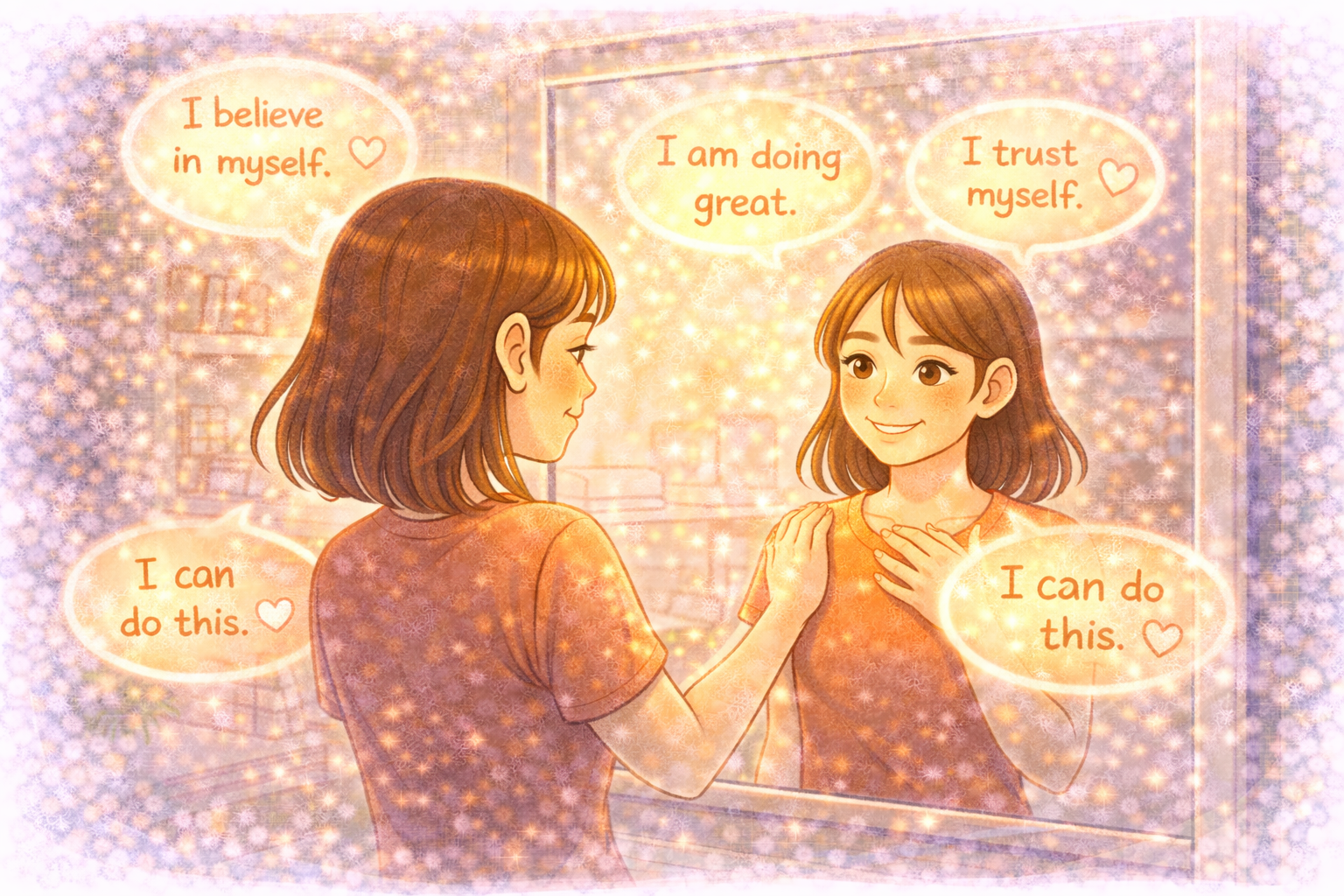
Self-trust is the foundation of confidence, decision-making, and emotional stability. When people struggle to trust themselves, even simple choices can feel overwhelming. The mirror habit—a practice that involves intentionally engaging with your own reflection—has gained attention as a simple yet powerful way to strengthen self-trust. While it may seem unusual at first, psychological research from Harvard Health, the American Psychological Association, and neuroscience studies on self-perception suggests that mirror-based practices can support self-awareness, emotional regulation, and confidence.
The mirror habit is not about affirmations or forced positivity. It is about learning to stay present with yourself—without avoidance, judgment, or performance.
If you are already exploring self-awareness practices, you may also find this helpful:
Emotional Triggers and Self-Awareness
What Is the Mirror Habit?
The mirror habit is the intentional practice of looking at your reflection while maintaining awareness of thoughts, emotions, and body sensations.
It may involve brief eye contact, gentle acknowledgment, or silent observation.
The goal is not to change your appearance or mood.
The goal is presence.
Why Self-Trust Matters
Self-trust is the belief that you can rely on your internal signals.
It influences:
- decision-making
- emotional regulation
- boundaries
- confidence
Without self-trust, people often seek constant reassurance.
With self-trust, clarity improves.
Why Looking at Yourself Can Feel Uncomfortable
Many people avoid sustained eye contact with their reflection.
This discomfort is psychological—not visual.
Mirrors can activate self-judgment, comparison, or unresolved emotion.
Avoidance weakens self-connection.
The Brain’s Response to Self-Perception
Neuroscience shows that seeing one’s own face activates self-referential networks in the brain.
These networks are linked to identity, emotion, and memory.
Harvard research indicates that repeated, neutral self-observation reduces threat response.
The Mirror Habit and Emotional Regulation
When emotions arise during mirror exposure, awareness increases.
Rather than suppressing emotion, the mirror reflects it.
This visibility helps regulate emotional intensity.
Regulation strengthens trust.
Mirror Habit vs Positive Affirmations
Affirmations focus on changing thought content.
The mirror habit focuses on presence.
You do not need to say anything.
You only need to remain.
Self-Awareness as the Root of Self-Trust
Self-trust grows from familiarity.
You trust what you understand.
The mirror habit increases familiarity with your emotional patterns.
Related reading:
Understanding Limiting Beliefs
How the Mirror Habit Reduces Self-Judgment
Judgment thrives in avoidance.
Presence reduces exaggeration.
Seeing yourself without commentary softens inner criticism.
APA research shows nonjudgmental awareness lowers self-criticism.
The Role of Eye Contact
Eye contact activates social-emotional circuitry.
Looking into your own eyes triggers recognition.
This strengthens internal safety.
Safety is essential for trust.
Mirror Exposure and Emotional Honesty
The mirror reflects subtle emotion.
You may notice fatigue, tension, or vulnerability.
Acknowledging these states builds honesty.
Honesty builds trust.
Starting the Mirror Habit Gently
Start with short durations.
10–30 seconds is enough.
No talking is required.
Breathing steadily helps.
Using Breath During the Mirror Habit
Breathing anchors attention.
Slow breathing reduces nervous system arousal.
Related reading:
Using Breath to Anchor the Mind
Mirror Habit and Self-Compassion
Self-compassion often emerges naturally.
Seeing your own humanity reduces harshness.
Related reading:
Practicing Self-Compassion Daily
How the Mirror Habit Builds Confidence
Confidence is familiarity with discomfort.
Standing with yourself—even when awkward—builds strength.
Confidence grows quietly.
Mirror Habit and Decision-Making
Self-trust improves clarity.
Clarity improves decisions.
When you are connected to yourself, choices feel steadier.
Mirror Habit During Emotional Triggers
After emotional reactions, the mirror offers grounding.
It reconnects you with the present moment.
Related reading:
How to Respond Instead of React
Common Myths About the Mirror Habit
- Myth: It is narcissistic
Reality: It increases awareness - Myth: You must speak affirmations
Reality: Silence works - Myth: Discomfort means failure
Reality: Discomfort means growth
When the Mirror Habit Feels Difficult
Discomfort is common.
Strong reactions may reflect unresolved emotion.
Reducing duration helps.
Support may be helpful if distress persists.
Mirror Habit and Emotional Integration
Integration means allowing emotion without suppression.
The mirror supports this process.
Integration strengthens emotional resilience.
Making the Mirror Habit Consistent
Consistency matters more than length.
Daily brief practice is effective.
Pairing with existing routines helps.
Mirror Habit as a Mindfulness Practice
The mirror becomes an anchor.
Attention returns to the present.
Related reading:
What Is Mindfulness and How to Start?
Self-Trust and Boundaries
Self-trust supports boundaries.
When you trust yourself, saying no feels safer.
Related reading:
When to Say “No” to Protect Your Peace
Long-Term Effects of the Mirror Habit
Over time, avoidance decreases.
Emotional tolerance increases.
Self-trust strengthens quietly.
Who Benefits Most From the Mirror Habit
This practice is helpful for those who:
- struggle with self-doubt
- avoid emotions
- seek confidence without performance
Mirror Habit vs External Validation
External validation is unstable.
Self-trust is internal.
The mirror habit shifts reliance inward.
Final Thoughts
The mirror habit is not about appearance.
It is about presence.
When you stop turning away from yourself, trust grows.
Self-trust is built through familiarity, honesty, and awareness.
The mirror simply reflects what has always been there.
More self-trust and mindset resources from MindBloomDaily:
The Role of Self-Talk in Confidence
Building Emotional Resilience
For people who care too much
A five-minute refresh, every day.
If this gave you a moment of calm, MindBloom Pro sends ten small positive things to your dashboard each morning — chosen for the family life you're actually living.



Discussion
Comments
Sign in to join the conversation.
Sign inLoading comments…