


Table of contents20 sections · tap to expandShowHide
Scrolling through social media or digital content often begins with intention and ends with confusion about where the time went. Minutes turn into hours, and many people report feeling mentally drained rather than satisfied. This pattern is not accidental. It is driven by a neurological feedback system commonly referred to as the dopamine loop. Research from Harvard Medical School, the American Psychological Association, the National Institutes of Health, and Stanford University shows that variable digital rewards strongly influence attention, motivation, and habit formation.
The dopamine loop does not mean technology is inherently harmful. It explains why scrolling is compelling, difficult to stop, and often disconnected from genuine satisfaction. Understanding this loop is the first step toward regaining control of attention.
If you are exploring healthier digital habits, you may also find this helpful:
Reducing Screen Time Without Feeling Deprived
What Is Dopamine?
Dopamine is a neurotransmitter involved in motivation, learning, and reward prediction. Contrary to popular belief, dopamine is not the “pleasure chemical.” Instead, it signals anticipation—the expectation that something rewarding might happen.
Harvard research shows that dopamine spikes most strongly before a reward, not after receiving it. This makes dopamine especially powerful in shaping habits.
The Dopamine Loop Explained
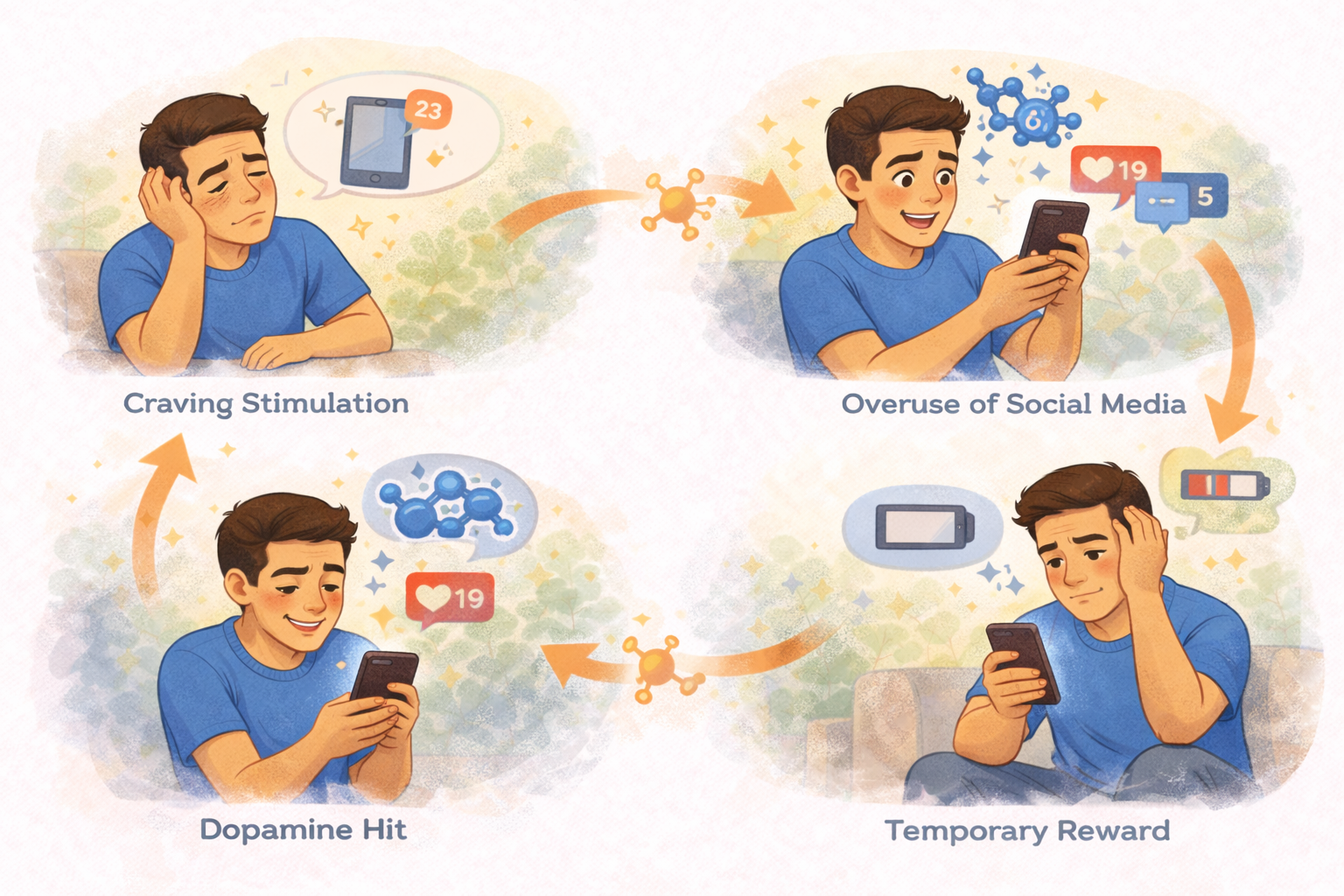
The dopamine loop follows a simple pattern:
- cue
- anticipation
- action
- variable reward
- repeat
Each step reinforces the next.
When a notification appears, the brain anticipates potential reward. Scrolling becomes the action. The unpredictable nature of content—sometimes interesting, sometimes not—creates variable reward. This unpredictability strengthens habit formation.
Why Variable Rewards Are So Addictive
Variable rewards are more addictive than predictable ones.
APA research shows that intermittent reinforcement—rewards delivered unpredictably—creates stronger behavioral conditioning than consistent rewards.
This is the same mechanism used in slot machines.
Social media feeds operate on this principle: the next scroll might reveal something exciting.
Scroll Addiction Is Not a Lack of Willpower
Excessive scrolling is often framed as a self-control issue, but neuroscience tells a different story.
The dopamine loop exploits fundamental learning systems in the brain.
NIH research shows that repeated exposure to variable rewards strengthens neural pathways that favor habitual behavior.
This makes stopping feel effortful, even when motivation is present.
How the Dopamine Loop Affects Attention
Frequent scrolling fragments attention.
Short bursts of stimulation train the brain to seek novelty rather than depth.
Stanford research links constant digital switching to reduced focus and increased mental fatigue.
Over time, sustained attention becomes more difficult.
Emotional Effects of the Scroll Loop
While dopamine drives engagement, it does not guarantee satisfaction.
Many people report feeling:
- mentally exhausted
- emotionally flat
- restless
- distracted
This occurs because anticipation outweighs fulfillment.
Social Comparison and the Dopamine Loop
Scrolling often includes comparison.
Upward comparison activates dopamine-driven desire while increasing anxiety.
APA research links frequent social comparison to lower mood and self-esteem.
Comparison intensifies the loop by creating emotional hooks.
Related reading:
Social Media and Relationship Anxiety
Why Stopping Feels Uncomfortable
When scrolling stops abruptly, dopamine levels drop.
This creates discomfort, boredom, or restlessness.
The brain interprets this as a problem to solve—often by returning to the feed.
This is not withdrawal in a clinical sense, but it feels psychologically compelling.
Notifications as Dopamine Triggers
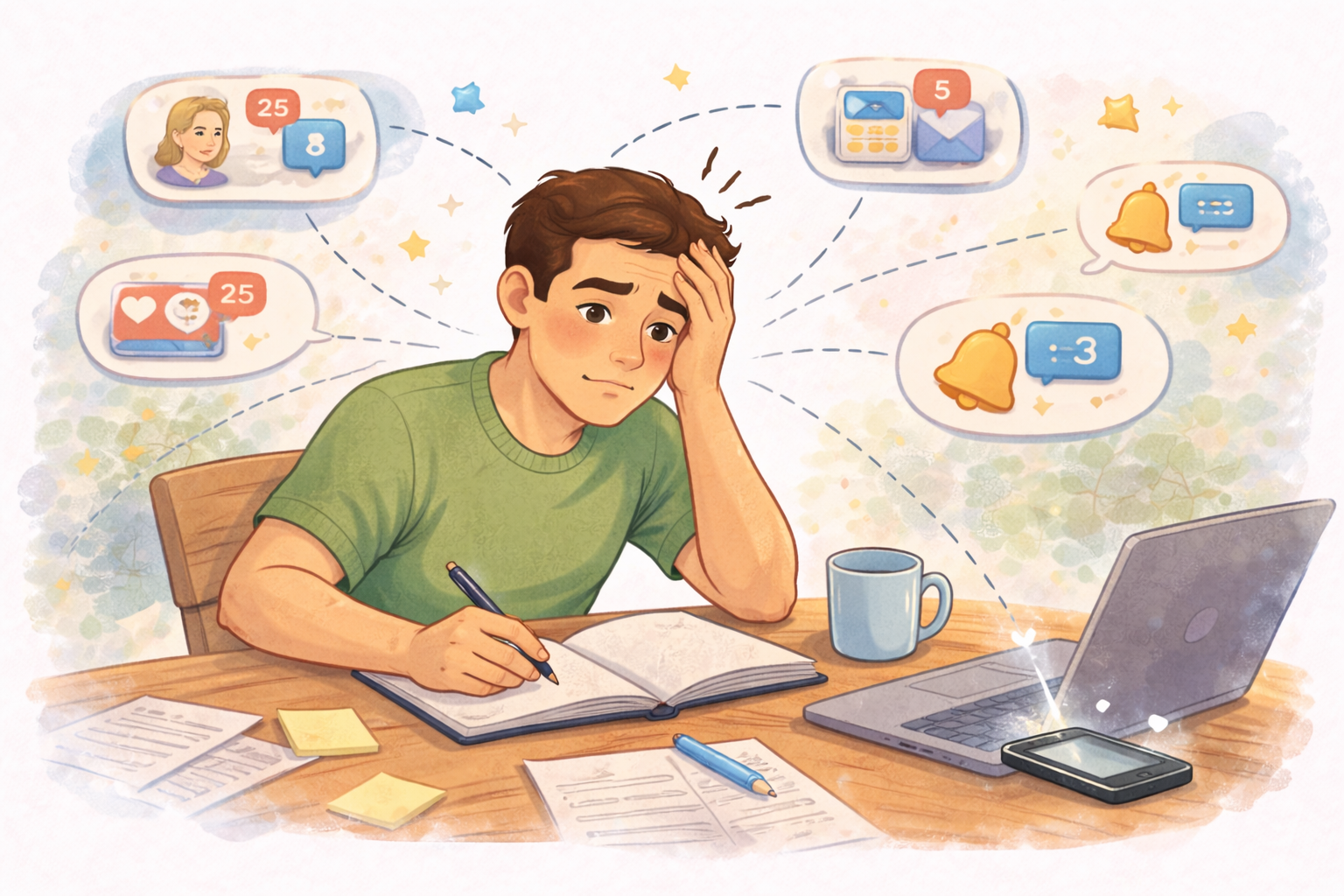
Notifications act as external cues.
They interrupt attention and restart the dopamine loop.
Harvard research shows that intermittent notifications increase compulsive checking behaviors.
Turning off nonessential notifications reduces loop activation.
Mindless vs Mindful Scrolling
Not all scrolling is harmful.
Mindful use involves intention and time boundaries.
Mindless scrolling occurs when the loop operates without awareness.
Awareness is the difference.
How the Dopamine Loop Impacts Mental Health
Chronic activation of the dopamine loop is linked to:
- attention fatigue
- increased anxiety
- sleep disruption
- reduced motivation for offline activities
NIH research connects excessive screen use with emotional dysregulation.
Breaking the Dopamine Loop Gently
Breaking the loop does not require total digital abstinence.
Effective strategies include reducing frictionless access.
This may involve:
- removing apps from the home screen
- using grayscale mode
- setting time limits
Replacing Scrolling With Fulfillment
The brain still needs stimulation.
Replacing scrolling with meaningful activities reduces reliance on dopamine loops.
Helpful replacements include:
- physical movement
- creative tasks
- deep reading
- face-to-face connection
Responding Instead of Reacting to Urges
Urges to scroll are automatic.
Pausing before acting weakens the loop.
Learn how to pause effectively here:
How to Respond Instead of React
Mindfulness and Dopamine Awareness
Mindfulness increases awareness of craving sensations.
Stanford research shows mindfulness reduces impulsive behavior.
Observing urges without acting creates choice.
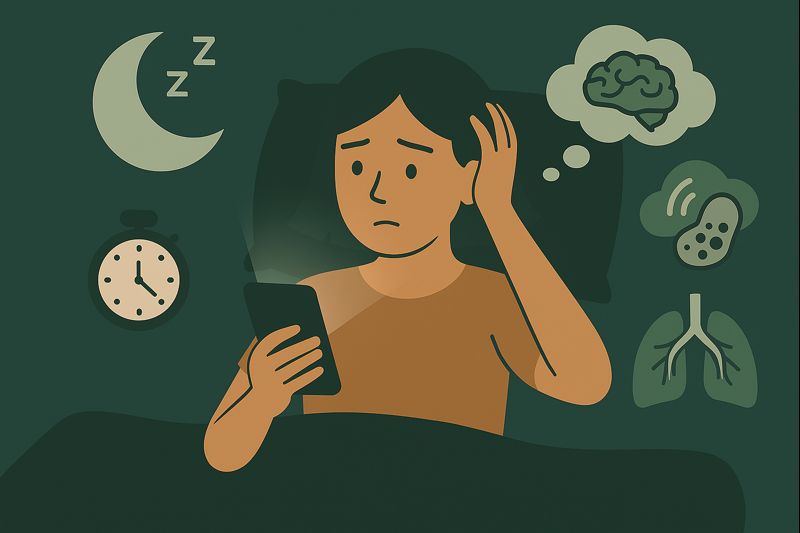
Sleep, Stress, and Scroll Addiction
Sleep deprivation increases dopamine sensitivity.
Stress lowers impulse control.
Both intensify the loop.
Supporting sleep and stress regulation reduces vulnerability.
Related reading:
Sleep Hygiene Tips for a More Restful Night
Common Myths About Dopamine
- Myth: Dopamine equals pleasure
Reality: It signals anticipation - Myth: Scrolling relaxes the brain
Reality: It often overstimulates it - Myth: Willpower solves addiction
Reality: Environment matters more
Creating a Healthier Digital Relationship
Healthier digital use involves intention, boundaries, and self-compassion.
The goal is not elimination, but balance.
When to Seek Support
If scrolling interferes with sleep, work, or relationships, professional support may help.
Support is a sign of awareness, not failure.
Final Thoughts
The dopamine loop explains why scrolling is compelling, not why you are weak. Digital platforms are designed to capture attention through variable reward systems.
Understanding this loop restores agency.
With awareness, boundaries, and gentle changes, attention can be reclaimed and used intentionally.
Attention is one of the most valuable resources we have. Learning how it is shaped allows us to protect it.
More digital wellness resources from MindBloomDaily:
Clean Your Digital Space, Clear Your Mind
Online Overwhelm and Mental Fatigue
For people who care too much
A five-minute refresh, every day.
If this gave you a moment of calm, MindBloom Pro sends ten small positive things to your dashboard each morning — chosen for the family life you're actually living.

Discussion
Comments
Sign in to join the conversation.
Sign inLoading comments…