


Table of contents20 sections · tap to expandShowHide
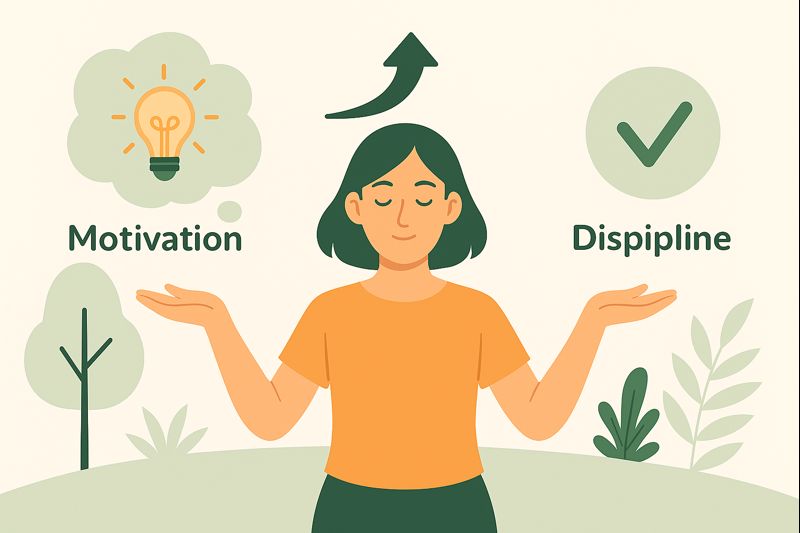
Most people believe success depends on feeling motivated. But motivation is unreliable—some days you’re inspired, other days you’re not. Research from the Harvard Medical School, the American Psychological Association, and the Stanford School of Medicine shows that discipline—not motivation—is what leads to consistent action and long-term achievement.
Motivation might help you start something new, but discipline is the only force that ensures you follow through when excitement fades. Understanding the difference between the two is essential for creating strong habits, achieving goals, and becoming the kind of person who shows up—even on difficult days.
If you’re working on building strong habits, you may enjoy:
How to Stay Consistent with New Habits
The Psychology of Motivation
Motivation is an emotional state, a surge of desire that makes you want to act. According to Harvard’s research on motivation, it is heavily influenced by internal and external factors such as environment, mood, sleep, reward cues, and even social interaction.
Motivation is:
- Temporary — it fluctuates throughout the day.
- Emotion-driven — moods affect it.
- Exciting at the beginning — but often weak during long-term tasks.
- Inconsistent — it disappears when challenges arise.
Relying on motivation alone is a guaranteed way to experience burnout, inconsistency, and self-blame. It simply cannot sustain long-term goals.
The Psychology of Discipline
Discipline, on the other hand, is a skill. It is the ability to take action regardless of how you feel. Stanford’s research on self-control shows that discipline is not about strictness—it is about creating systems and environments that make desired behaviors easier to perform.
Discipline is:
- Stable and reliable — you can count on it daily.
- System-driven — habits and routines support it.
- Emotion-resistant — works even on low-energy days.
- Built through repetition — not something you’re born with.
Discipline grows stronger each time you practice it. This is why small habits work so well—they train the brain to follow through.
Learn more about small habit strategies:
The 2-Minute Rule: Start Small, Stay Consistent
Motivation vs. Discipline: Why We Confuse the Two
Many people think they need motivation to act—but neuroscience shows the opposite. Action precedes motivation. The APA reports that once a person starts a task, their motivation increases because the brain rewards action with dopamine.
In reality:
- Motivation leads to excitement.
- Discipline leads to results.
- Motivation is unpredictable.
- Discipline is dependable.
Motivation gets you going. Discipline keeps you going.
How Discipline Works in the Brain
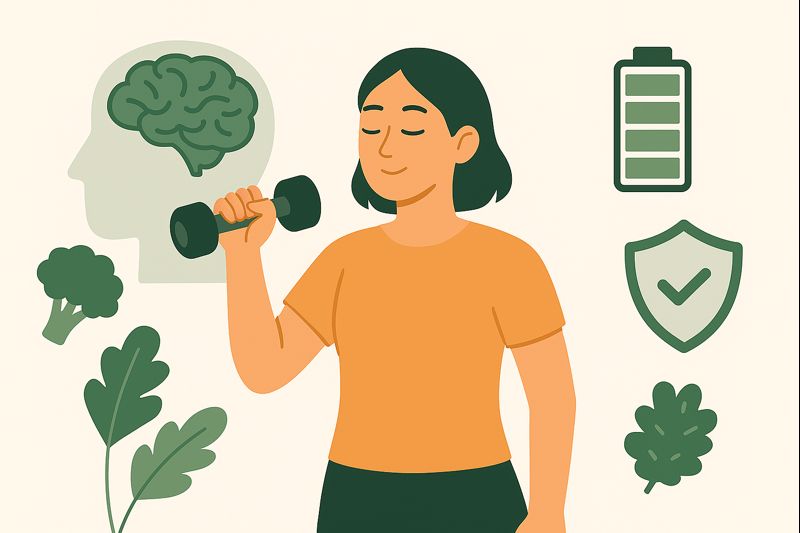
Discipline activates the prefrontal cortex—the part of the brain responsible for planning, decision-making, and self-regulation. In contrast, motivation is tied to the limbic system, which responds to emotions and rewards.
When your brain is tired, stressed, or overwhelmed, motivation collapses. But disciplined systems remain steady because they rely on structure, not emotion.
This is why choosing environment over willpower often leads to better outcomes. Explore more here:
How to Design a Distraction-Free Work Day
Where Motivation Helps
Although discipline is more important, motivation still plays a powerful role. Motivation is especially useful for:
- Starting something new
- Setting goals
- Celebrating progress
- Connecting tasks to passion or purpose
Motivation is the spark. But sparks die quickly if you don’t build a structure around them.
Where Discipline Matters More
Discipline is essential in moments when motivation disappears. This includes:
- When you’re tired
- When tasks feel boring
- When stress is high
- When distractions appear
These are the moments that determine long-term success. Discipline provides the consistency needed to keep moving forward.
Building Discipline Through Systems
Stanford research shows that disciplined people don’t have extraordinary willpower—they simply design their lives in ways that make good habits easy and bad habits difficult.
Tools that build discipline include:
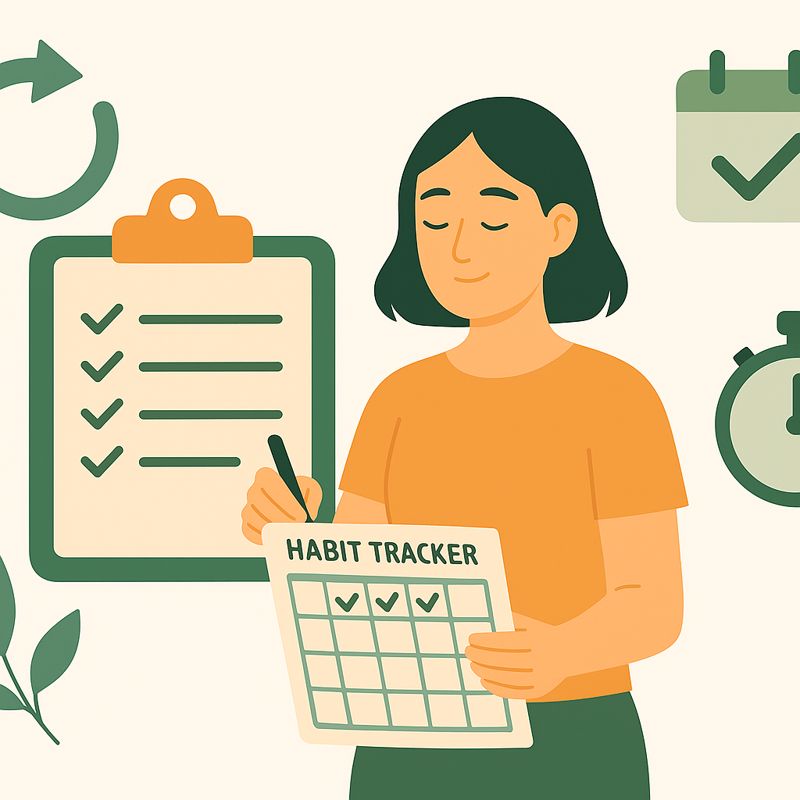
- Habit stacking: attaching a new habit to an existing one.
- Environment design: removing distractions and adding cues.
- Routines: stabilizing your morning or evening rhythm.
- Accountability: tracking progress or sharing goals with someone.
If you’re building a routine to strengthen discipline, explore:
Morning Routines for Peak Productivity
Real-Life Examples: Motivation vs. Discipline
Example 1: Exercise
Motivation says: “I’ll work out when I feel inspired.”
Discipline says: “I move my body every day, even for two minutes.”
Motivation depends on mood. Discipline depends on identity.
Example 2: Writing
Motivation says: “I’ll write when creativity hits.”
Discipline says: “I write one sentence every day.”
This small action builds long-term creativity and consistency.
Example 3: Healthy Eating
Motivation says: “I’m starting on Monday!”
Discipline says: “I prep one healthy snack today.”
Small actions create sustainable habits.
Example 4: Reducing Screen Time
Motivation says: “I need to use my phone less.”
Disciplined action says: “I plug my phone in another room at night.”
Real-life change comes from structural decisions, not inspirational thoughts.
If screen time affects your habits, try:
Reducing Screen Time Without Feeling Deprived
How to Strengthen Discipline (Even If You Feel Unmotivated)
You don’t need more motivation—you need better strategies. Here are research-backed methods to build discipline gradually:
1. Start Extremely Small
The smaller the habit, the less resistance you’ll feel. This allows discipline to grow slowly but steadily.
2. Create Clear Cues
Attach habits to something consistent: waking up, brushing your teeth, or making coffee.
3. Make the Environment Work for You
Remove friction that slows you down. Add cues that trigger positive behavior.
4. Use the “Just One Minute” Rule
You can do anything for one minute. This builds the discipline muscle with minimal stress.
5. Celebrate Small Wins
A quick internal reward helps reinforce behavior in the brain.
The Hidden Relationship Between Motivation and Discipline
Motivation and discipline are not enemies—they support each other. When you start acting with discipline, motivation eventually increases because your brain begins associating effort with reward.
This is why small actions create powerful momentum.
Final Thoughts
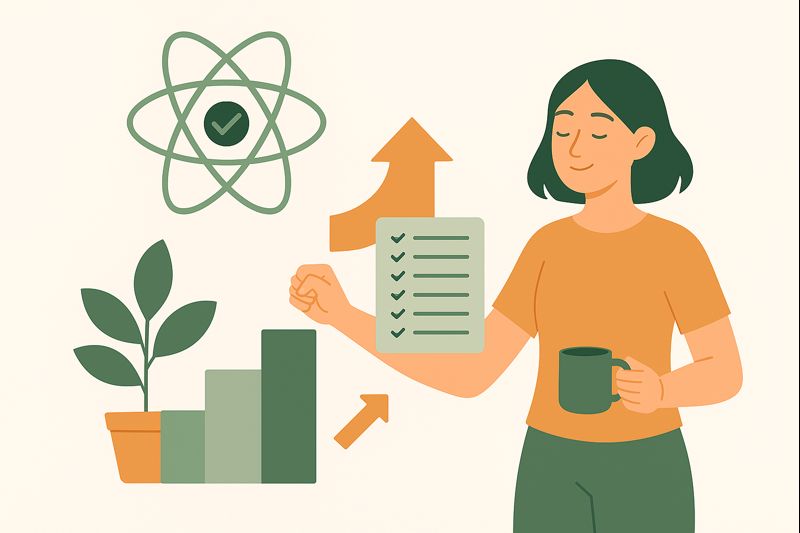
Motivation is a spark. Discipline is the engine. One gets you started; the other gets you results. When you build systems that support follow-through, you no longer need to wait for inspiration—you act because action is part of who you are.
Consistency does not come from feeling motivated—it comes from strengthening discipline, designing supportive environments, and embracing small, repeatable steps.
More resources to support your journey:
How to Stay Consistent with New Habits
The 2-Minute Rule: Start Small, Stay Consistent
For people who care too much
A five-minute refresh, every day.
If this gave you a moment of calm, MindBloom Pro sends ten small positive things to your dashboard each morning — chosen for the family life you're actually living.
Discussion
Comments
Sign in to join the conversation.
Sign inLoading comments…