


Table of contents23 sections · tap to expandShowHide
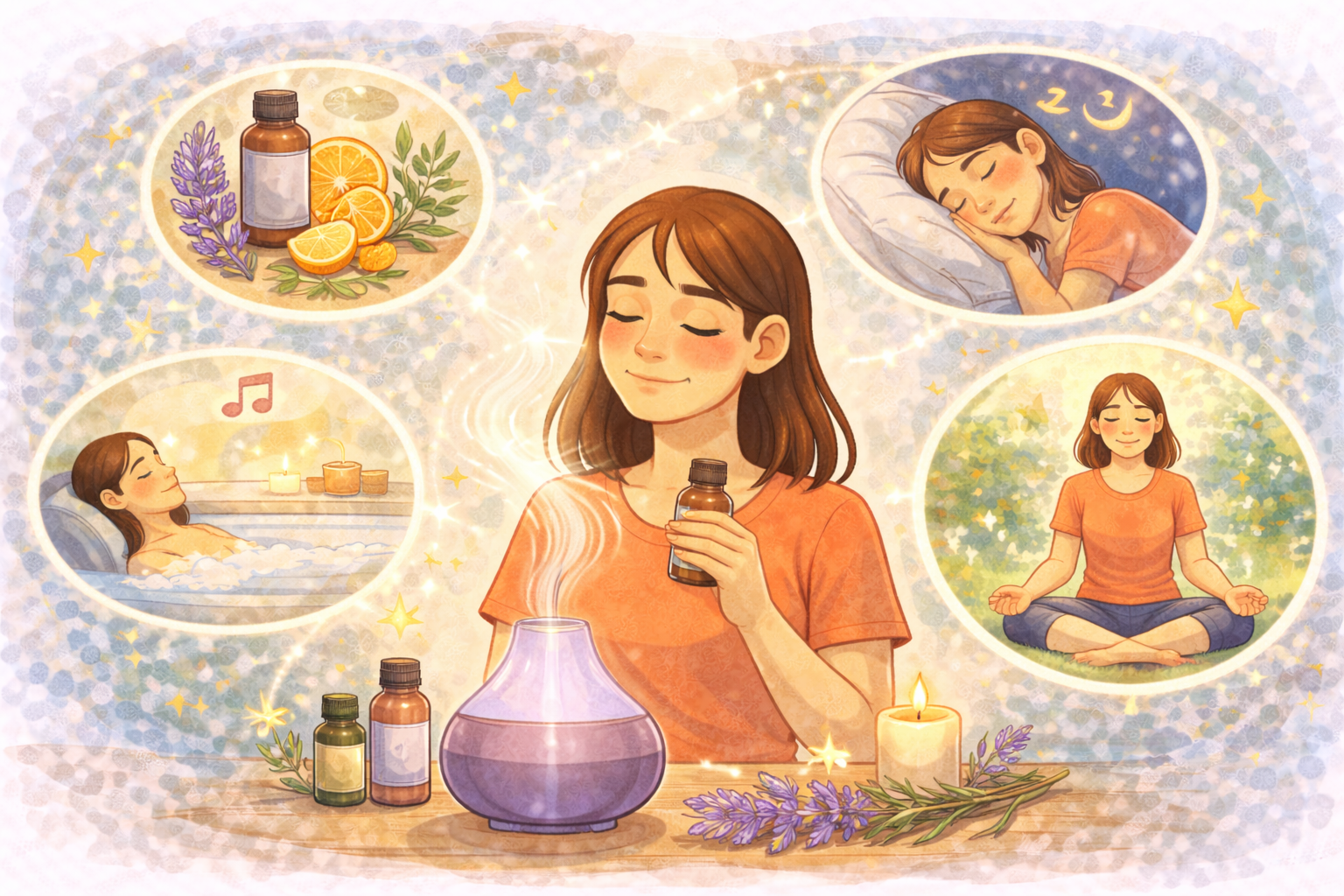
Stress has become a common part of modern life. Deadlines, constant connectivity, emotional demands, and information overload keep the nervous system in a near-constant state of alert. While stress cannot always be eliminated, many people seek gentle, supportive ways to help the body and mind return to balance. Aromatherapy—using natural plant-based essential oils—has gained attention as one such approach. Research from Harvard Health, the American Psychological Association, the National Institutes of Health, and the Cleveland Clinic suggests that aromatherapy may support stress relief by influencing brain chemistry, emotional regulation, and the stress response.
Aromatherapy is not a cure for stress, nor a replacement for medical care. Instead, it offers a complementary, sensory-based way to support relaxation and emotional calm.
If you are already exploring natural stress-support tools, you may also find this helpful:
Breathing Patterns to Calm an Anxious Mind
What Is Aromatherapy?
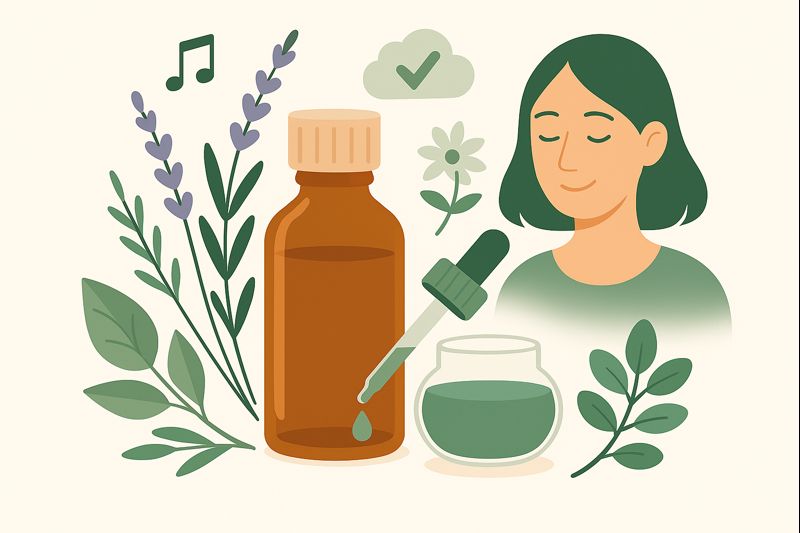
Aromatherapy is the use of concentrated plant extracts—known as essential oils—to promote physical and emotional wellbeing.
These oils are typically extracted from flowers, leaves, bark, roots, or peels.
They are used through inhalation, topical application (when properly diluted), or diffusion into the air.
The key mechanism lies in how scent interacts with the brain.
How Smell Affects the Brain
The sense of smell is directly connected to the limbic system.
The limbic system governs emotions, memory, and stress responses.
Unlike other senses, scent bypasses rational processing and reaches emotional centers quickly.
This explains why certain scents evoke calm, comfort, or emotional shifts almost instantly.
Aromatherapy and the Stress Response
Stress activates the sympathetic nervous system.
This triggers the “fight or flight” response.
NIH-supported studies show that some essential oils may help activate the parasympathetic nervous system—the body’s relaxation response.
This shift supports lower heart rate, reduced muscle tension, and calmer breathing.
Essential Oils Commonly Used for Stress Relief
Not all essential oils have the same effects.
Some are more closely associated with relaxation and emotional balance.
Lavender: The Most Studied Calming Oil
Lavender is one of the most researched essential oils for stress.
Studies published by the NIH show that lavender may reduce anxiety symptoms and promote relaxation.
Lavender appears to influence GABA activity, a neurotransmitter associated with calm.
Many people use lavender before sleep or during periods of emotional tension.
Bergamot: Uplifting and Soothing
Bergamot oil is derived from citrus peel.
Research suggests it may reduce stress while supporting positive mood.
Cleveland Clinic notes that citrus oils can feel both calming and energizing.
This makes bergamot useful during daytime stress.
Chamomile: Gentle Emotional Support
Chamomile is known for its calming properties.
Its aroma may help ease nervous tension and irritability.
Chamomile is often used when stress is accompanied by restlessness or emotional sensitivity.
Frankincense: Grounding the Mind
Frankincense has a warm, resinous scent.
It is often used in mindfulness and meditation practices.
Some research suggests it may support slower breathing and emotional grounding.
Frankincense is commonly associated with a sense of inner calm.
How Aromatherapy May Support Emotional Regulation
Stress often disrupts emotional balance.
Aromatherapy may help by creating a calming sensory input.
APA research suggests that sensory-based relaxation techniques can reduce emotional reactivity.
Scent provides a non-verbal pathway to emotional regulation.
Aromatherapy and Mindfulness
Mindfulness involves present-moment awareness.
Focusing on scent anchors attention.
This helps interrupt racing thoughts.
Aromatherapy can support mindfulness by providing a sensory focal point.
Related reading:
What Is Mindfulness and How to Start?
Ways to Use Aromatherapy for Stress Relief
Aromatherapy can be incorporated gently into daily routines.
Diffusion
Diffusers release essential oil molecules into the air.
This creates a consistent, calming environment.
Inhalation
Inhaling from a tissue or personal inhaler offers quick support.
This is useful during stressful moments.
Topical Use
When diluted with carrier oil, essential oils may be applied to pulse points.
Always follow safety guidelines.
Aromatherapy and the Nervous System
Stress relief occurs when the nervous system feels safe.
Aromatherapy may support this by signaling relaxation through scent.
NIH research suggests this sensory input can lower perceived stress levels.
Why Aromatherapy Feels Subtle Yet Effective
Aromatherapy works gently.
It does not force relaxation.
Instead, it supports the body’s natural calming mechanisms.
This makes it suitable for long-term use.
Common Myths About Aromatherapy
- Myth: Aromatherapy is only placebo
Reality: Brain imaging shows real neurological effects - Myth: Stronger scents work better
Reality: Gentle exposure is often more effective - Myth: One oil works for everyone
Reality: Individual response varies
Safety Considerations
Essential oils are potent.
They should be used responsibly.
NIH and Cleveland Clinic recommend proper dilution and avoiding ingestion unless supervised by a professional.
People with sensitivities should start slowly.
Aromatherapy as Part of a Stress-Relief Toolkit
Aromatherapy works best alongside other stress-management practices.
This may include breathing, movement, boundaries, and rest.
Related reading:
When to Say “No” to Protect Your Peace
Using Aromatherapy Consistently
Consistency matters more than intensity.
Using scent at the same time each day conditions relaxation.
This builds a calming ritual.
Emotional Associations and Scent
Over time, the brain associates certain scents with calm.
This strengthens stress relief responses.
Conditioned relaxation becomes more effective.
When Aromatherapy May Not Be Enough
Chronic stress may require additional support.
Aromatherapy should complement—not replace—professional care.
Seeking help is a sign of strength.
Final Thoughts
Aromatherapy may support stress relief by engaging the brain’s emotional centers, calming the nervous system, and creating moments of sensory grounding.
Its effects are gentle, cumulative, and personal.
While it cannot remove life’s stressors, it can help the body respond more calmly.
Sometimes, a single breath of a familiar, calming scent is enough to remind the nervous system that it is safe to rest.
More stress-relief resources from MindBloomDaily:
Evening Routines That Promote a Calm Mind
The Role of Nature in Reducing Stress
For people who care too much
A five-minute refresh, every day.
If this gave you a moment of calm, MindBloom Pro sends ten small positive things to your dashboard each morning — chosen for the family life you're actually living.

Discussion
Comments
Sign in to join the conversation.
Sign inLoading comments…